🍽
Fresh Catch
Grilled perfectly.
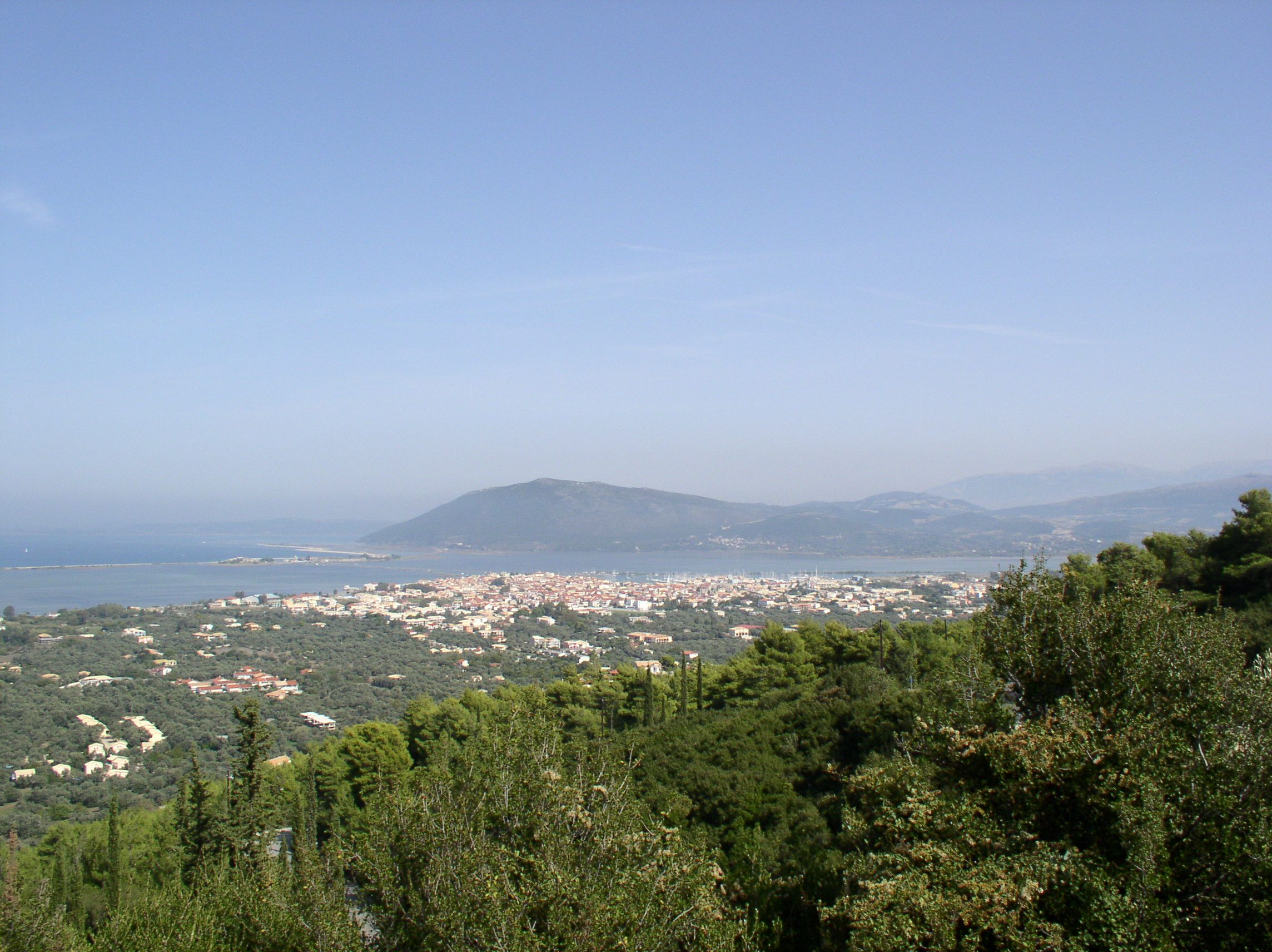
"Discover the authentic beauty of Lefkada."
A lack of water led to the construction of a 3 kilometres (1.9 mi) long aqueduct from the island's interior to the town in 1564, during the reign of Sultan Suleiman the Magnificent (r. 1520–1566). Bringing water to the walled town, as well as to the much larger—some 700–800 houses—open town that had grown around it, was one of the most important works of Ottoman civil architecture in the western Balkans. On top of the aqueduct was a footpath that provided the only access to the island, other than by the sea. In the aftermath of the Ottoman defeat at the Battle of Lepanto, the castle was unsuccessfully besieged by the forces of the Holy League. As a result, it was completely rebuilt and enlarged by the Kapudan Pasha Kılıç Ali Pasha, in 1572–1574, into a hexagonal fortress with large towers as artillery platforms.
According to the descriptions of travellers like Evliya, Lefkada was an urban centre of some importance, boasting "two of the largest works of Ottoman civil and military architecture in the Western Balkans", namely the aqueduct built by Sultan Suleiman the Magnificent (r. 1520–1566) and the Castle of Santa Maura, which was completely rebuilt by Kılıç Ali Pasha in the reign of Sultan Selim II (r. 1566–1574).
Research Note
Part of our exhaustive 2026 Golden Guide archive for Lefkada. Verified by local historians and environmental researchers.
The Orsini family lost Lefkada in 1331 to Walter VI of Brienne, who in 1343 ceded the castrum Sancte Maure and the island to the Venetian Graziano Giorgio. In 1360/62, Leonardo I Tocco seized Lefkada, assuming the title of duke (dux Lucate), whence the island is sometimes also referred to as "the Duchy" (el Ducato and variants thereof) in Western sources of the period. The local Orthodox archbishop was evicted. After Albanian clans took over much of Epirus in the 1350s and 1360s, they launched frequent attacks on the island between 1375 and 1395. Carlo I Tocco (r. 1376–1429) made the island the capital of his domains, which apart from the County Palatine of Cephalonia and Zakynthos also included much of the Epirote mainland, and enlarged the fortified town.
In the 17th century, Lefkada became a separate sanjak within the Eyalet of the Archipelago, although, according to Evliya Çelebi it belonged briefly to the Morea Eyalet in the 15th and 17th centuries. Evliya visited the island in 1670/71 and left a long and accurate description of the fortifications, as well as of the town, where Islam had apparently made considerable progress. According to Evliya, the walled town boasted five Friday mosques, including an Imperial Mosque (Hünkar Camii), which was a converted church, a minor mosque (masjid), a madrasa, two schools (maktab), a bath (hammam), and five public fountains (çeshme). The walled town, with its 200 stone houses, was now occupied exclusively by Muslims, while the two suburbs (varosh) to the east and west were built of wood and had a mixed population. The western one was far larger, with 300 houses to 40–50 in the eastern one, and had a wooden mosque and masjid, a tekke, a maktab, two caravanserais, as well as seven small churches. Evliya remarks that this suburb had many wine shops, which were popular with both the inhabitants and the garrison. Another suburb (the Varosh-i Lefqada) was located on the island itself, with some 700 houses, all of them inhabited by Christian Greeks, who had 20 churches. Evliya's account is corroborated by Jacob Spon and George Wheler's account that the town had about 5,000 to 6,000 inhabitants, mostly Greeks or Turks.
Research Note
Part of our exhaustive 2026 Golden Guide archive for Lefkada. Verified by local historians and environmental researchers.
Lefkada (Greek: Λευκάδα, Lefkáda, [lefˈkaða]), also known as Lefkas or Leukas (Ancient Greek and Katharevousa: Λευκάς, Leukás, modern pronunciation Lefkás) and Leucadia, is a Greek island in the Ionian Sea on the west coast of Greece, connected to the mainland by a long causeway and floating bridge. The principal town of the island and seat of the municipality is Lefkada. It is situated in the northern part of the island, approximately 25 minutes by automobile away from Aktion National Airport. The island is part of the regional unit of Lefkada.
The ancient sources call Leucas a Corinthian colony, perhaps with a Corcyraen participation. There was a cult to Apollo Leucatos at the south western cape of the island, where white cliffs stand, that may have given its name to the island. This was a site where criminals were thrown (hence "Leucadian trial") in order to judge their guilt or innocence from their injury at the fall. Furthermore, according to legend, it was the jumping spot of Sappho when she committed suicide out of frustrated love and also that of Artemisia of Caria, and therefore may have some connection to Aphrodite.
In antiquity, the island was connected to the mainland by a bridge, which was the longest stone bridge of ancient Greece.
Research Note
Part of our exhaustive 2026 Golden Guide archive for Lefkada. Verified by local historians and environmental researchers.
In the 17th century, Lefkada became a separate sanjak within the Eyalet of the Archipelago, although, according to Evliya Çelebi it belonged briefly to the Morea Eyalet in the 15th and 17th centuries. Evliya visited the island in 1670/71 and left a long and accurate description of the fortifications, as well as of the town, where Islam had apparently made considerable progress. According to Evliya, the walled town boasted five Friday mosques, including an Imperial Mosque (Hünkar Camii), which was a converted church, a minor mosque (masjid), a madrasa, two schools (maktab), a bath (hammam), and five public fountains (çeshme). The walled town, with its 200 stone houses, was now occupied exclusively by Muslims, while the two suburbs (varosh) to the east and west were built of wood and had a mixed population. The western one was far larger, with 300 houses to 40–50 in the eastern one, and had a wooden mosque and masjid, a tekke, a maktab, two caravanserais, as well as seven small churches. Evliya remarks that this suburb had many wine shops, which were popular with both the inhabitants and the garrison. Another suburb (the Varosh-i Lefqada) was located on the island itself, with some 700 houses, all of them inhabited by Christian Greeks, who had 20 churches. Evliya's account is corroborated by Jacob Spon and George Wheler's account that the town had about 5,000 to 6,000 inhabitants, mostly Greeks or Turks.
Research Note
Part of our exhaustive 2026 Golden Guide archive for Lefkada. Verified by local historians and environmental researchers.
Explore the rich local heritage and uncover hidden secrets of this amazing destination.
Research Note
Part of our exhaustive 2026 Golden Guide archive for Lefkada. Verified by local historians and environmental researchers.
The dishes that define this place
Grilled perfectly.
Artisan made.
Foraged daily.
Explore the ancient pathways.
A pristine spot away from the crowds.
Unmarked history.
Curated by locals, organised by depth
Watch the sun dip below the Aegean.
Find Hotels in Lefkada, Greece
via Booking.com — free cancellation on most rooms
Affiliate link — we earn a small commission at no extra cost to you