🍽
Fresh Catch
Grilled perfectly.
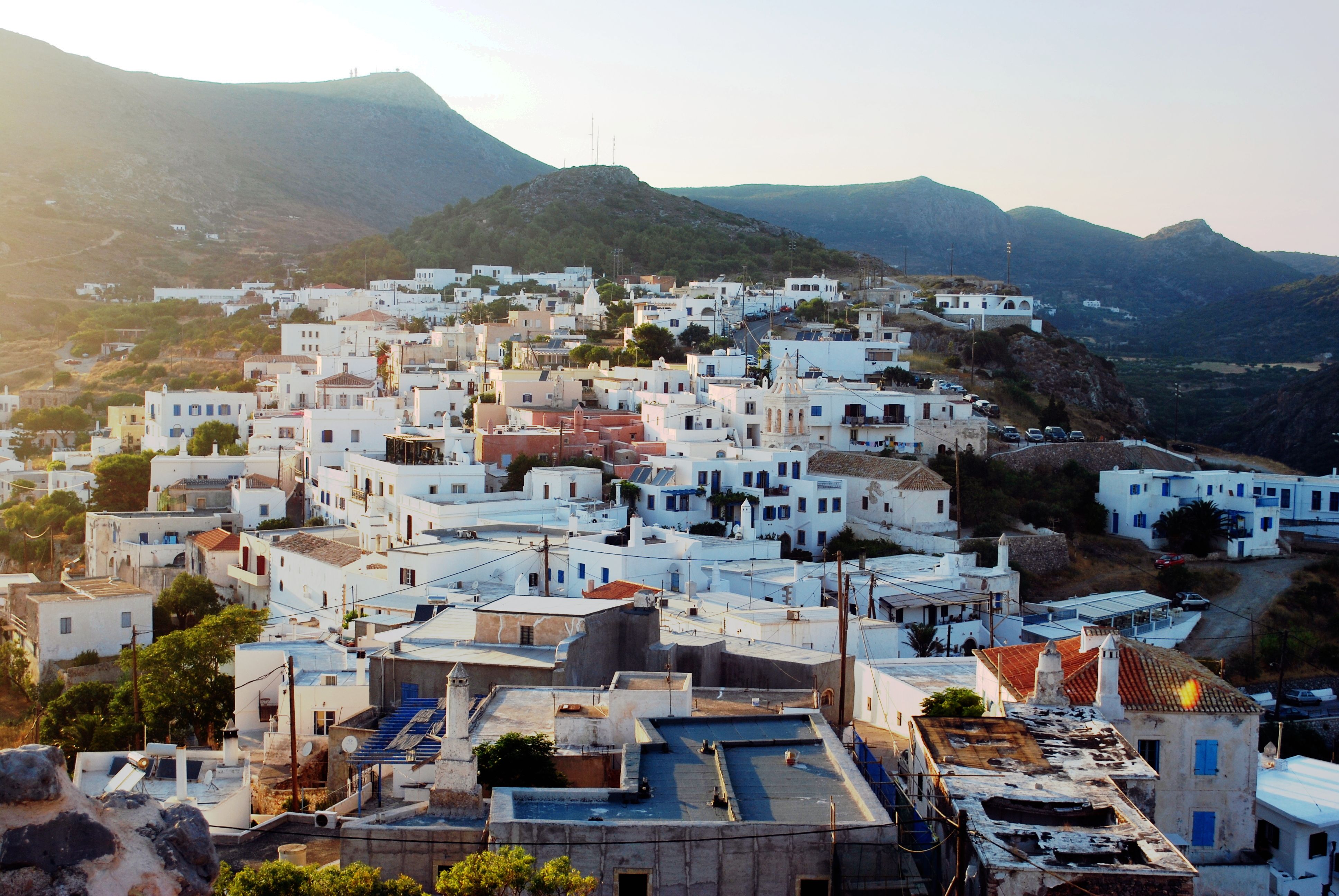
"Discover the authentic beauty of Kythira."
Kythira ( kih-THEER-ə, KITH-irr-ə; Greek: Κύθηρα [ˈciθira]), also transliterated as Cythera, Kythera and Kithira, is an island in Greece lying opposite the south-eastern tip of the Peloponnese peninsula. It is traditionally listed as one of the seven main Ionian Islands, although it is distant from the main group. Administratively, it belongs to the Islands regional unit, which is part of the Attica region, despite its distance from the Saronic Islands, around which the rest of Attica is centered. As a municipality, it includes the island of Antikythera to the south.
The island is strategically located between the Greek mainland and Crete, and from ancient times until the mid-19th century was a crossroads of merchants, sailors, and conquerors. As such, it has had a long and varied history and has been influenced by many civilizations and cultures. This is reflected in its architecture (a blend of traditional, Aegean and Venetian elements), as well as the traditions and customs, influenced by centuries of coexistence of the Greek and Venetian cultures.
Kythira is close to the Hellenic arc plate boundary zone, and thus highly prone to earthquakes. Many earthquakes in recorded history have had their epicentres near or on the island. Probably the largest in recent times is the 1903 earthquake near at the village of Mitata, that caused significant damage as well as limited loss of life. It has had two major earthquakes in the 21st century: that of November 5, 2004, measuring between 5.6 and 5.8 on the Richter scale and the earthquake of January 8, 2006, measuring 6.9 on the Richter scale. The epicenter of the latter was in the sea about 20 km (12 mi) to the east of Kythira, with a focus at a depth of approximately 70 km (43 mi). Many buildings were damaged, particularly old ones, mostly in the village of Mitata, but with no loss of life. It was felt as far as Italy, Egypt, Malta and Jordan.
Research Note
Part of our exhaustive 2026 Golden Guide archive for Kythira. Verified by local historians and environmental researchers.
When Saint Theodore of Cythera led a resettlement after the Byzantine reconquest of Crete in 962, he found the island occupied only by wandering bands of hunters. He established a great monastery at Paliochora; a town grew up around it, largely populated from Laconia.
Research Note
Part of our exhaustive 2026 Golden Guide archive for Kythira. Verified by local historians and environmental researchers.
The island is strategically located between the Greek mainland and Crete, and from ancient times until the mid-19th century was a crossroads of merchants, sailors, and conquerors. As such, it has had a long and varied history and has been influenced by many civilizations and cultures. This is reflected in its architecture (a blend of traditional, Aegean and Venetian elements), as well as the traditions and customs, influenced by centuries of coexistence of the Greek and Venetian cultures.
There are archaeological remains from the Helladic period, contemporary with the Minoans. There is archaeological evidence of Kythiran trade as far as Egypt and Mesopotamia.
Kythira is not mentioned in the literary sources for centuries after its conversion; in the period of Byzantine weakness at the end of the seventh century, it might have been exposed to attacks from both the Slavic tribes who raided the mainland and from Arab pirates from the sea. Archaeological evidence suggests the island was abandoned about 700 AD.
Research Note
Part of our exhaustive 2026 Golden Guide archive for Kythira. Verified by local historians and environmental researchers.
Only five of the island's villages are on the coast (Platia Amos, Agia Pelagia, Diakofti, Avlemonas, & Kapsali). During July and August, several traditional dances will be held in various villages. These dances usually attract the majority of the island's population, the biggest of which are the festival of 'Panagia' in Potamos on 15 August, and the wine festival in Mitata on the first Friday and Saturday of August.
The Trifylleion Hospital of Kythera is the only hospital on the island. The hospital's construction was made possible through the contributions of Greek Americans, including Mixalis Semitekolos, also known as Mike Semet, who was a prominent figure in the New York City restaurant industry in the early 20th century. Semitekolos, an immigrant from Kythera, raised funds for the hospital by participating in a pan-Kytherian fundraising campaign in the United States in the early 1950s. His significant monetary contributions earned him recognition from King Paul of Greece with the Order of the Phoenix. The groundbreaking for the hospital was on May 21, 1953, in Potamos, making it the first hospital on the island. It remains the only hospital on the island to this day, providing essential medical services to the residents of Kythira and the surrounding areas. The charitable organization responsible for the hospital evolved to become the Trifylleion Foundation of Kytherians and is still active today.
Research Note
Part of our exhaustive 2026 Golden Guide archive for Kythira. Verified by local historians and environmental researchers.
Only five of the island's villages are on the coast (Platia Amos, Agia Pelagia, Diakofti, Avlemonas, & Kapsali). During July and August, several traditional dances will be held in various villages. These dances usually attract the majority of the island's population, the biggest of which are the festival of 'Panagia' in Potamos on 15 August, and the wine festival in Mitata on the first Friday and Saturday of August.
Research Note
Part of our exhaustive 2026 Golden Guide archive for Kythira. Verified by local historians and environmental researchers.
The dishes that define this place
Grilled perfectly.
Artisan made.
Foraged daily.
Explore the ancient pathways.
A pristine spot away from the crowds.
Unmarked history.
Curated by locals, organised by depth
Watch the sun dip below the Aegean.
Find Hotels in Kythira, Greece
via Booking.com — free cancellation on most rooms
Affiliate link — we earn a small commission at no extra cost to you