🍽
Fresh Catch
Grilled perfectly.
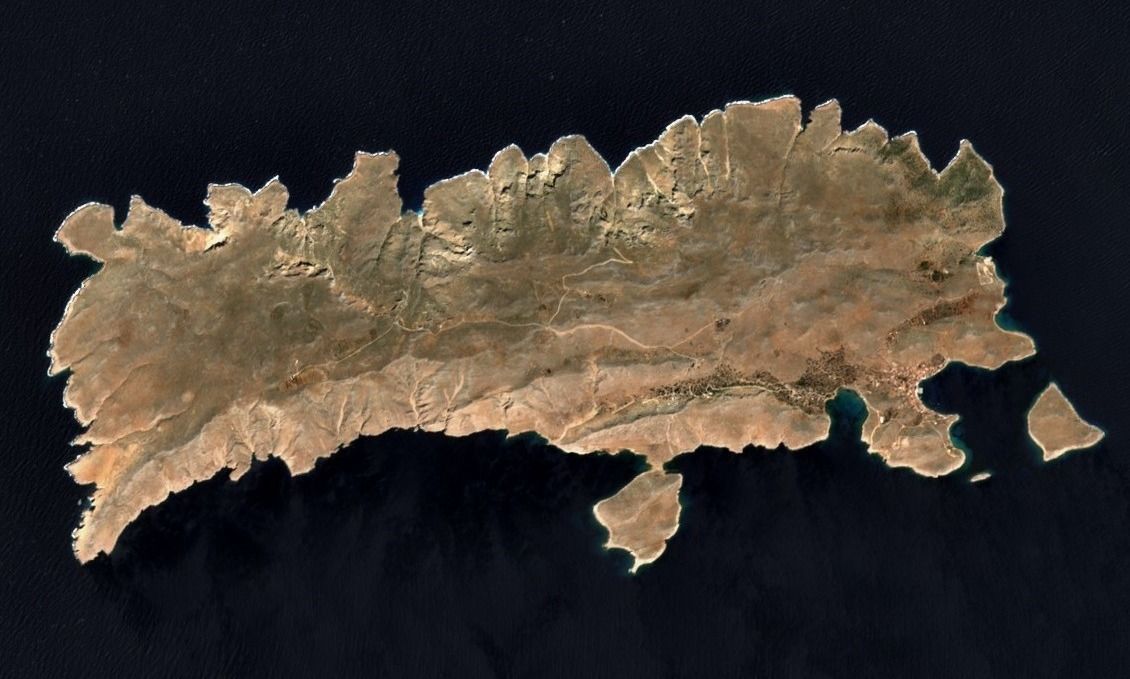
"Discover the authentic beauty of Hydra."
The mansions of Lazaros and George Kountouriotis, Boudouris, Kriezis, Voulgaris, Sachinis, and Miaoulis all contain collections of 18th-century island furniture. The descendants of Lazarus Kountouriotis donated his mansion to the Historic-Ethnologic Institute of Greece. Today, it operates as an extension branch of the National Museum of History.
=== Pre-history, antiquity, Byzantine and Venetian era ===
For much of its existence, Hydra stayed on the margins of history. The population was very small in ancient times and, except for the brief mentions in Herodotus and Pausanias, left little or no record in the history of those times.
Research Note
Part of our exhaustive 2026 Golden Guide archive for Hydra. Verified by local historians and environmental researchers.
The Tsamadou mansion, on the left side as one enters the harbor, is now a Maritime Academy. The Tsamados family donated the mansion for the purpose of hosting the Greek Maritime Academy on their island. Another house, originally built for the Tsamados family on the hill overlooking the port was donated to the church to be used as a weaving school and production facility of textiles and carpets. The house now belongs to the Colloredo-Mansfeld family and became known as the Old Carpet Factory.
There are numerous churches and six Orthodox monasteries on the island. Two particularly noteworthy monasteries are Profitis Ilias, founded in the 19th century, and Ayia Efpraxia. Both are on a hill overlooking the main harbor.
The island's cathedral is the old Monastery of the Dormition of the Virgin and sits on the quayside in the town. The monastery contains the tomb of Lazaros Kountouriotis, the richest sea captain on Hydra, who gave his entire fortune to support the Greek War of Independence.
Research Note
Part of our exhaustive 2026 Golden Guide archive for Hydra. Verified by local historians and environmental researchers.
Hydra, or Ydra or Idra (EE-dra; Greek: Ύδρα, romanized: Ýdra, pronounced [ˈiðra] in Modern Greek), and in antiquity Hydrea, is one of the Saronic Islands of Greece, located in the Aegean Sea between the Myrtoan Sea and the Argolic Gulf. It is separated from the Peloponnese by a narrow strip of water. In ancient times, the island was known as Hydrea (Ὑδρέα, derived from the Greek word for "water"), a reference to the natural springs on the island.
The name Hydra comes from ancient Greek ὕδρα (hydra), derived from the Greek word for "water", a reference to the natural springs on the island. The local Arvanite name is attested in two variants: the common variant Nύδρα/Nidhra and the rare form Nidhriza or Hydriza.
The mansions of Lazaros and George Kountouriotis, Boudouris, Kriezis, Voulgaris, Sachinis, and Miaoulis all contain collections of 18th-century island furniture. The descendants of Lazarus Kountouriotis donated his mansion to the Historic-Ethnologic Institute of Greece. Today, it operates as an extension branch of the National Museum of History.
Research Note
Part of our exhaustive 2026 Golden Guide archive for Hydra. Verified by local historians and environmental researchers.
There is one main town, known simply as "Hydra port" (population 1,900 as of 2011). It consists of a crescent-shaped harbor, around which is centered a strand of restaurants, shops, markets, and galleries that cater to tourists and to locals (Hydriots or Hydriotes). Steep stone streets lead up and outward from the harbor area. Most of the local residences, as well as the hostelries on the island, are located on these streets. Other small villages or hamlets on the island include Mandraki, Kamini, Vlychos, Palamidas, Episkopi, and Molos. Wheeled vehicles are not permitted on the island, including but not limited to cars, motorcycles, scooters, bicycles, and e-bikes.
The plague of 1792 killed a large part of the population, and many people moved away. As a result, the town was almost completely abandoned for a while. By the end of the 18th century, Hydra had again become quite prosperous, with its vessels trading as far as France, Spain, and even the Americas. Napoleon presented the island with the huge silver chandelier in the cathedral as a gesture of gratitude for the Hydriots' role in running the British blockade and so bringing food to France.
Research Note
Part of our exhaustive 2026 Golden Guide archive for Hydra. Verified by local historians and environmental researchers.
The Miaoulia Festival provides a series of cultural events in the last week in June and commemorates the victory of naval battles led by Admiral Miaouli during the Greek War of Independence. The festival culminates with a fictionalised re-enactment at sea of the burning of an Ottoman armada followed by a spectacular firework display.
Hydrama Theatre and Arts Centre showcases free theatre and dance productions during the Hydra Performing Arts Festival every summer. Hydrama has hosted drama and dance activities for the local community and international visitors since 2001.
Research Note
Part of our exhaustive 2026 Golden Guide archive for Hydra. Verified by local historians and environmental researchers.
The dishes that define this place
Grilled perfectly.
Artisan made.
Foraged daily.
Explore the ancient pathways.
A pristine spot away from the crowds.
Unmarked history.
Curated by locals, organised by depth
Watch the sun dip below the Aegean.
Find Hotels in Hydra, Greece
via Booking.com — free cancellation on most rooms
Affiliate link — we earn a small commission at no extra cost to you
