🍽
Fresh Catch
Grilled perfectly.
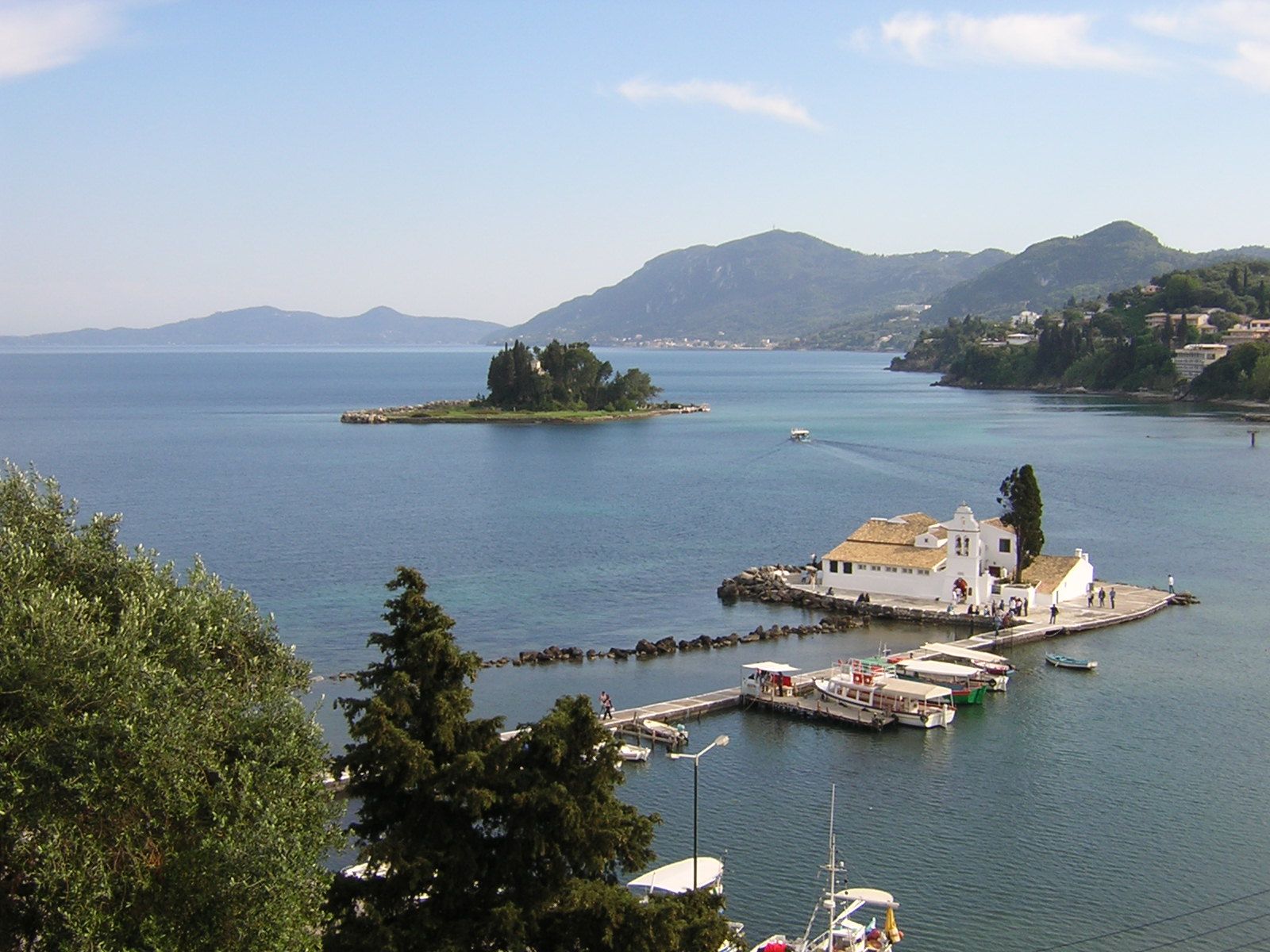
"Discover the authentic beauty of Corfu."
The island is bound up with the history of Greece from the beginnings of Greek mythology, and is marked by numerous battles and conquests. Ancient Korkyra took part in the Battle of Sybota, which was a catalyst for the Peloponnesian War, and, according to Thucydides, the largest naval battle between Greek city-states until that time. Thucydides also reports that Korkyra was one of the three great naval powers of Greece in the fifth century BCE, along with Athens and Corinth. Ruins of ancient Greek temples and other archaeological sites of the ancient city of Korkyra are located in Palaiopolis. Medieval castles, scattered across the island, are a legacy of struggles against invasions by pirates and the Ottomans. Two of these castles enclose its capital, which is the only city in Greece to be surrounded in such a way. As a result, Corfu's capital has been officially declared a kastropolis ("castle city") by the Greek government.
This opposition came to a head in the early part of the 7th century BC, when their fleets fought the first naval battle recorded in Greek history, in 665 BC, according to Thucydides. These hostilities ended in the conquest of Corcyra by the Corinthian tyrant Periander (Περίανδρος), who induced his new subjects to join in the colonization of Apollonia and Anactorium. The island soon regained its independence and thenceforth devoted itself to a purely mercantile policy. During the Persian invasion of 480 BC, it manned the second-largest Greek fleet (60 ships) but took no active part in the war. In 435 BC it was again involved in a quarrel with Corinth over the control of Epidamnus, and sought assistance from Athens (see Battle of Sybota).
Christianity arrived early in Corfu; two disciples of Saint Paul, Jason of Tarsus and Sosipatrus of Patras, taught the Gospel, and, according to tradition, the city of Corfu and much of the island converted to Christianity. Their relics were housed in the old cathedral (at the site of the current Old Fortress, before a dedicated church was built for them c. 100 AD.
Research Note
Part of our exhaustive 2026 Golden Guide archive for Corfu. Verified by local historians and environmental researchers.
Lazaretto Island, formerly known as St. Dimitrios, is located 1.1 km (0.68 mi) off the coast northeast of the city Corfu. Lazaretto has an area of 7.1 ha (17.5 acres) and comes under the administration of the Greek National Tourist Organization. During Venetian rule in the early 16th century, a monastery was built on the islet, and a leprosarium was established later in the century, after which the island was named. In 1798, during the French occupation, the islet was occupied by the Russo-Turkish fleet, who ran it as a military hospital. During the period of British rule, in 1814, the leprosarium was once again opened after renovations, and following Enosis in 1864 the leprosarium again saw occasional use. During World War II, the Axis occupation of Greece established a Nazi concentration camp there for the prisoners of the Greek resistance, while remaining today are the two-storeyed building that served as the Headquarters of the Italian army, a small church, and the wall against which those condemned to death were shot.
Christianity arrived early in Corfu; two disciples of Saint Paul, Jason of Tarsus and Sosipatrus of Patras, taught the Gospel, and, according to tradition, the city of Corfu and much of the island converted to Christianity. Their relics were housed in the old cathedral (at the site of the current Old Fortress, before a dedicated church was built for them c. 100 AD.
From at least the early 9th century, Corfu and the other Ionian Islands formed part of the theme of Cephallenia. This naval theme provided a defensive bulwark for Byzantium against western threats, but also played a major role in securing the sea lanes to the Byzantine possessions in southern Italy. Indeed, traveller reports from throughout the middle Byzantine period (8th–12th centuries) make clear that Corfu was "an important staging post for travels between East and West". Indeed, the medieval name of Corfu first appears (Latinized Coryphus) in Liutprand of Cremona's account of his 968 embassy to the Byzantine court. Corfu enjoyed relative peace and safety during the Macedonian dynasty (867–1054), which allowed the construction of a monumental church to Saints Iason and Sosipatrus outside the city wall of Palaiopolis. Nevertheless, in 933, the city, led by its archbishop, Arsenios, withstood a Saracen attack; Arsenios was canonized and became the city's patron saint.
Research Note
Part of our exhaustive 2026 Golden Guide archive for Corfu. Verified by local historians and environmental researchers.
The island is bound up with the history of Greece from the beginnings of Greek mythology, and is marked by numerous battles and conquests. Ancient Korkyra took part in the Battle of Sybota, which was a catalyst for the Peloponnesian War, and, according to Thucydides, the largest naval battle between Greek city-states until that time. Thucydides also reports that Korkyra was one of the three great naval powers of Greece in the fifth century BCE, along with Athens and Corinth. Ruins of ancient Greek temples and other archaeological sites of the ancient city of Korkyra are located in Palaiopolis. Medieval castles, scattered across the island, are a legacy of struggles against invasions by pirates and the Ottomans. Two of these castles enclose its capital, which is the only city in Greece to be surrounded in such a way. As a result, Corfu's capital has been officially declared a kastropolis ("castle city") by the Greek government.
Corfu is located in the northwestern corner of Greece. The northeastern edge of Corfu lies off the coast of Sarandë, Albania, separated by straits varying in width from 3 to 23 km (2 to 14 miles). The southeast side of the island lies off the coast of Thesprotia, Greece. Its shape resembles a sickle (drepanē, δρεπάνι), to which the ancients compared it: the concave side, with the city and harbour of Corfu in the centre, lies toward the Albanian coast. With the island's area estimated at 592.9 km2 (228.9 sq mi; 146,500 acres), it runs approximately 64 km (40 mi) long, with greatest breadth at around 32 km (20 mi).
Venice influenced Corfu's urban architecture, reflecting the island's Venetian rule from 1386 to 1797. The architecture of the Old Town of Corfu, along with its narrow streets, the kantounia, has clear Venetian influence and is amongst the World Heritage Sites in Greece. Other notable Venetian-era buildings include the Nobile Teatro di San Giacomo di Corfù, the first Greek opera house, and Liston, a multi-level commercial and residential building, with an arched colonnade at ground level, lined with cafes and restaurants on its east side, and restaurants and other stores on its west side. Liston's main thoroughfare is often the site of parades and other mass gatherings. Liston is on the edge of the Spianada (Esplanade), the vast main plaza and park which incorporates a cricket field, a pavilion, and Maitland's monument. Also notable are the Old and New forts, the recently restored Palace of Sts. Michael and George, formerly the residence of the British colonial governor and the seat of the Ionian Senate, and the summer Palace of Mon Repos, formerly the property of the Greek royal family and birthplace of the Prince Philip, Duke of Edinburgh. The Park of Mon Repos is built on part of the Palaiopolis of Kerkyra, where the Greek Archaeological Service conducted excavations in collaboration with academics and universities internationally. Examples of the finds can be found in the Museum of the Palace of Mon Repos and at the Archaeological Museum of Corfu.
Research Note
Part of our exhaustive 2026 Golden Guide archive for Corfu. Verified by local historians and environmental researchers.
The island's culture absorbed Venetian influence in a variety of ways; like other Ionian islands (see Cuisine of the Ionian islands), its local cuisine took in such elements and today's Corfiot cooking includes Venetian delicacies and recipes: "Pastitsada", deriving from the Venetian "Pastissada" (Italian: "Spezzatino") and the most popular dish in the island of Corfu, "Sofrito", "Strapatsada", "Savoro", "Bianco" and "Mandolato".
During the First World War, the island served as a refuge for the Serbian army, which retreated there on Allied ships from a homeland occupied by the Austrians, Germans, and Bulgarians. During their stay, a large portion of Serbian soldiers died from exhaustion, food shortages, and various diseases. Most of their remains were buried at sea near the island of Vido, a small island at the mouth of Corfu port, and a monument of thanks to the Greek nation has been erected at Vido by the grateful Serbs; consequently, the waters around Vido Island are known by the Serbian people as the Blue Tomb (in Serbian, Плава Гробница, Plava Grobnica), after a poem written by Milutin Bojić following World War I.
Venice influenced Corfu's urban architecture, reflecting the island's Venetian rule from 1386 to 1797. The architecture of the Old Town of Corfu, along with its narrow streets, the kantounia, has clear Venetian influence and is amongst the World Heritage Sites in Greece. Other notable Venetian-era buildings include the Nobile Teatro di San Giacomo di Corfù, the first Greek opera house, and Liston, a multi-level commercial and residential building, with an arched colonnade at ground level, lined with cafes and restaurants on its east side, and restaurants and other stores on its west side. Liston's main thoroughfare is often the site of parades and other mass gatherings. Liston is on the edge of the Spianada (Esplanade), the vast main plaza and park which incorporates a cricket field, a pavilion, and Maitland's monument. Also notable are the Old and New forts, the recently restored Palace of Sts. Michael and George, formerly the residence of the British colonial governor and the seat of the Ionian Senate, and the summer Palace of Mon Repos, formerly the property of the Greek royal family and birthplace of the Prince Philip, Duke of Edinburgh. The Park of Mon Repos is built on part of the Palaiopolis of Kerkyra, where the Greek Archaeological Service conducted excavations in collaboration with academics and universities internationally. Examples of the finds can be found in the Museum of the Palace of Mon Repos and at the Archaeological Museum of Corfu.
Research Note
Part of our exhaustive 2026 Golden Guide archive for Corfu. Verified by local historians and environmental researchers.
Explore the rich local heritage and uncover hidden secrets of this amazing destination.
Research Note
Part of our exhaustive 2026 Golden Guide archive for Corfu. Verified by local historians and environmental researchers.
The dishes that define this place
Grilled perfectly.
Artisan made.
Foraged daily.
Explore the ancient pathways.
A pristine spot away from the crowds.
Unmarked history.
Curated by locals, organised by depth
Watch the sun dip below the Aegean.
Find Hotels in Corfu, Greece
via Booking.com — free cancellation on most rooms
Affiliate link — we earn a small commission at no extra cost to you