🍽
Fresh Catch
Grilled perfectly.
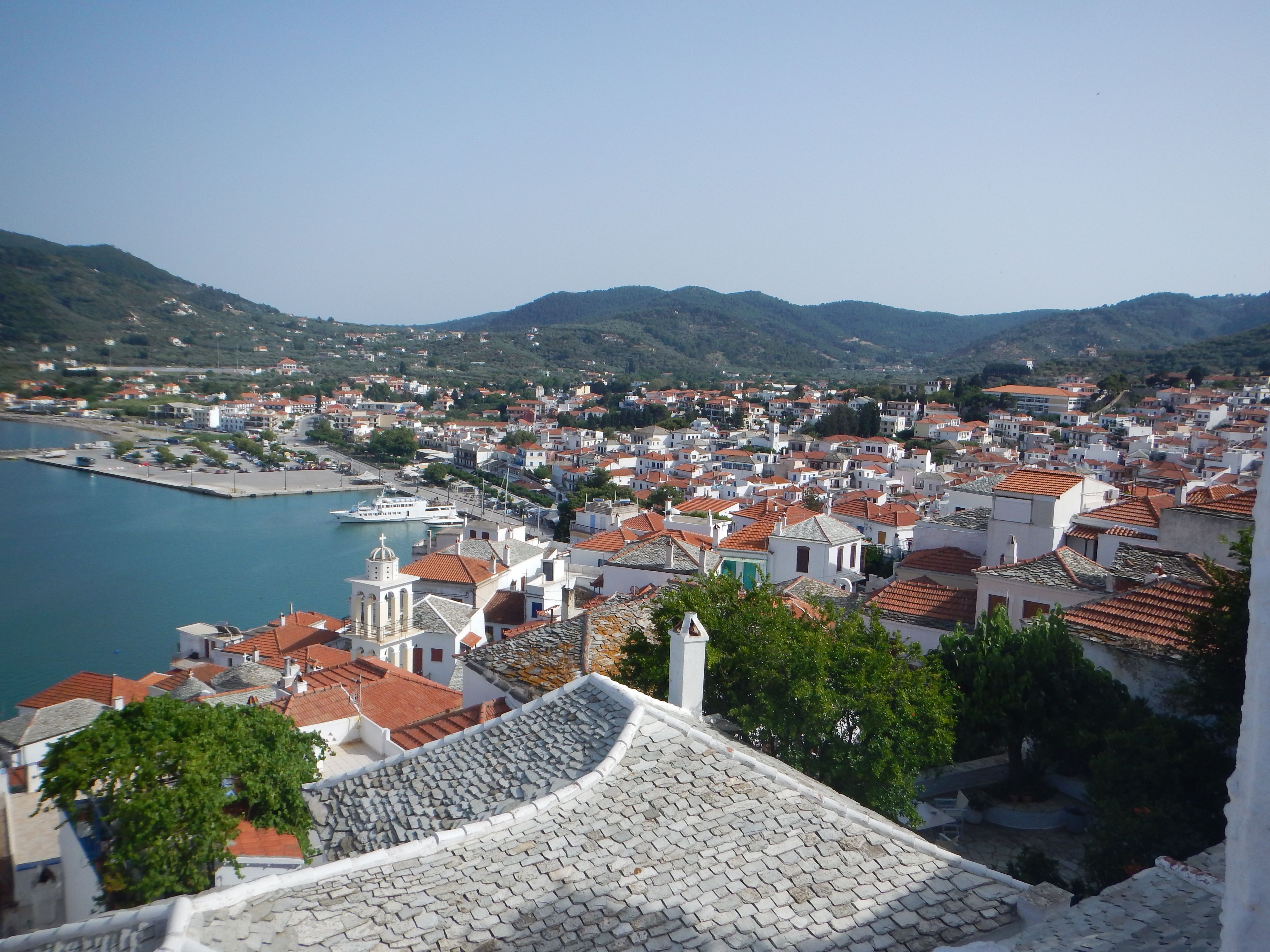
"Discover the authentic beauty of Skopelos."
According to the legend, Skopelos was founded by Staphylos (Greek for grape), one of the sons of the god Dionysos and the princess Ariadne of Crete. Historically, in the Late Bronze Age the island, then known as Peparethos or Peparethus (Ancient Greek: Πεπάρηθος), was colonised by the Minoans, who introduced viticulture to the island.
Pliny the Elder, in his book Natural History writes:
The second largest settlement is Glossa village, situated on the northwestern tip of the island, just above Loutraki harbour, with an elevation ranging from 200 to 300 m (656 to 984 ft). It is 25.4 km (15.8 mi) from Skopelos town. It is a tranquil village with traditional houses, with 993 residents.
Research Note
Part of our exhaustive 2026 Golden Guide archive for Skopelos. Verified by local historians and environmental researchers.
The island has more than 360 churches and chapels. Most are closed throughout the year except for the feast day of to whom or whatever the church has been dedicated, and the majority have been privately built. The oldest existing ecclesiastical structure is the Basilica of Agios Athanasios, built in the 11th century and located in the Kastro area. All except one of the churches on the island observe the Greek Orthodox faith. The remaining church hosts a small enclave of Jehovah's Witnesses. Christianity was formalized in Skopelos by the appointment of the Bishop Riginos in the 4th century. Under the Reign of the Emperor Julian the Apostate, Riginos was martyred in 362 AD. The saint's feast day is February 25 — a holiday on the island.
Skopelos and its neighbour Skiathos were the filming locations of the 2008 film Mamma Mia! The wedding procession was filmed at the Agios Ioannis Chapel near Glossa.
Research Note
Part of our exhaustive 2026 Golden Guide archive for Skopelos. Verified by local historians and environmental researchers.
According to the legend, Skopelos was founded by Staphylos (Greek for grape), one of the sons of the god Dionysos and the princess Ariadne of Crete. Historically, in the Late Bronze Age the island, then known as Peparethos or Peparethus (Ancient Greek: Πεπάρηθος), was colonised by the Minoans, who introduced viticulture to the island.
Perhaps because of the legend of its founding by the son of the god of wine, the island was known throughout the ancient Greek cities of the Mediterranean Sea for its wine. The play Philoctetes (first performed at the Festival of Dionysus in 409 BC) by Sophocles includes a wine merchant lost on his way to "Peparethos, rich in grapes and wine".
Nikolaides family: Nikolakis Hatzistamatis, the founder of the Nikolaides family was born on the island of Skiathos around 1770. He moved to Skopelos where he served as one of the island's highest officials. Nikolakis Hatzistamatis is mentioned by the Greek author Alexandros Papadiamantis in the novel "Hatzopoulo". His only son Jannios (1800–1885), changed the family name to Nikolaides. Jannios also served in high offices. Descendants of the above are the present donors of the Folklore Museum of Skopelos.
Research Note
Part of our exhaustive 2026 Golden Guide archive for Skopelos. Verified by local historians and environmental researchers.
Perhaps because of the legend of its founding by the son of the god of wine, the island was known throughout the ancient Greek cities of the Mediterranean Sea for its wine. The play Philoctetes (first performed at the Festival of Dionysus in 409 BC) by Sophocles includes a wine merchant lost on his way to "Peparethos, rich in grapes and wine".
The physician Apollodorus, in the work in which he wrote recommending King Ptolemy what wines in particular to drink—for in his time the wines of Italy were not generally known—has spoken in high terms of that of Naspercene in Pontus, next to which he places the Oretic, and then the Aeneatian, the Leucadian, the Ambraciotic, and the Peparethian, to which last he gives the preference over all the rest. However, he states that it enjoyed an inferior reputation, from the fact of its not being considered fit for drinking until it had been kept for six years.
Plum and almond orchards exist but are less extensive than in the past. Wine production from local grape has been minimal ever since the phylloxera blight of the 1940s destroyed the vineyards. Though there is local small-scale wine production using local grapes, most wine produced on the island is for home use and much is pressed from grapes imported from Thessaly. Herding of domestic goats and domestic sheep continues and a local feta type cheese (katiki) is produced from these stocks. Beekeeping and honey production have increased in recent years. Skopelos supports a small fishing fleet which fishes local waters.
Research Note
Part of our exhaustive 2026 Golden Guide archive for Skopelos. Verified by local historians and environmental researchers.
Perhaps because of the legend of its founding by the son of the god of wine, the island was known throughout the ancient Greek cities of the Mediterranean Sea for its wine. The play Philoctetes (first performed at the Festival of Dionysus in 409 BC) by Sophocles includes a wine merchant lost on his way to "Peparethos, rich in grapes and wine".
Research Note
Part of our exhaustive 2026 Golden Guide archive for Skopelos. Verified by local historians and environmental researchers.
The dishes that define this place
Grilled perfectly.
Artisan made.
Foraged daily.
Explore the ancient pathways.
A pristine spot away from the crowds.
Unmarked history.
Curated by locals, organised by depth
Watch the sun dip below the Aegean.
Find Hotels in Skopelos, Greece
via Booking.com — free cancellation on most rooms
Affiliate link — we earn a small commission at no extra cost to you