🍽
Fresh Catch
Grilled perfectly.
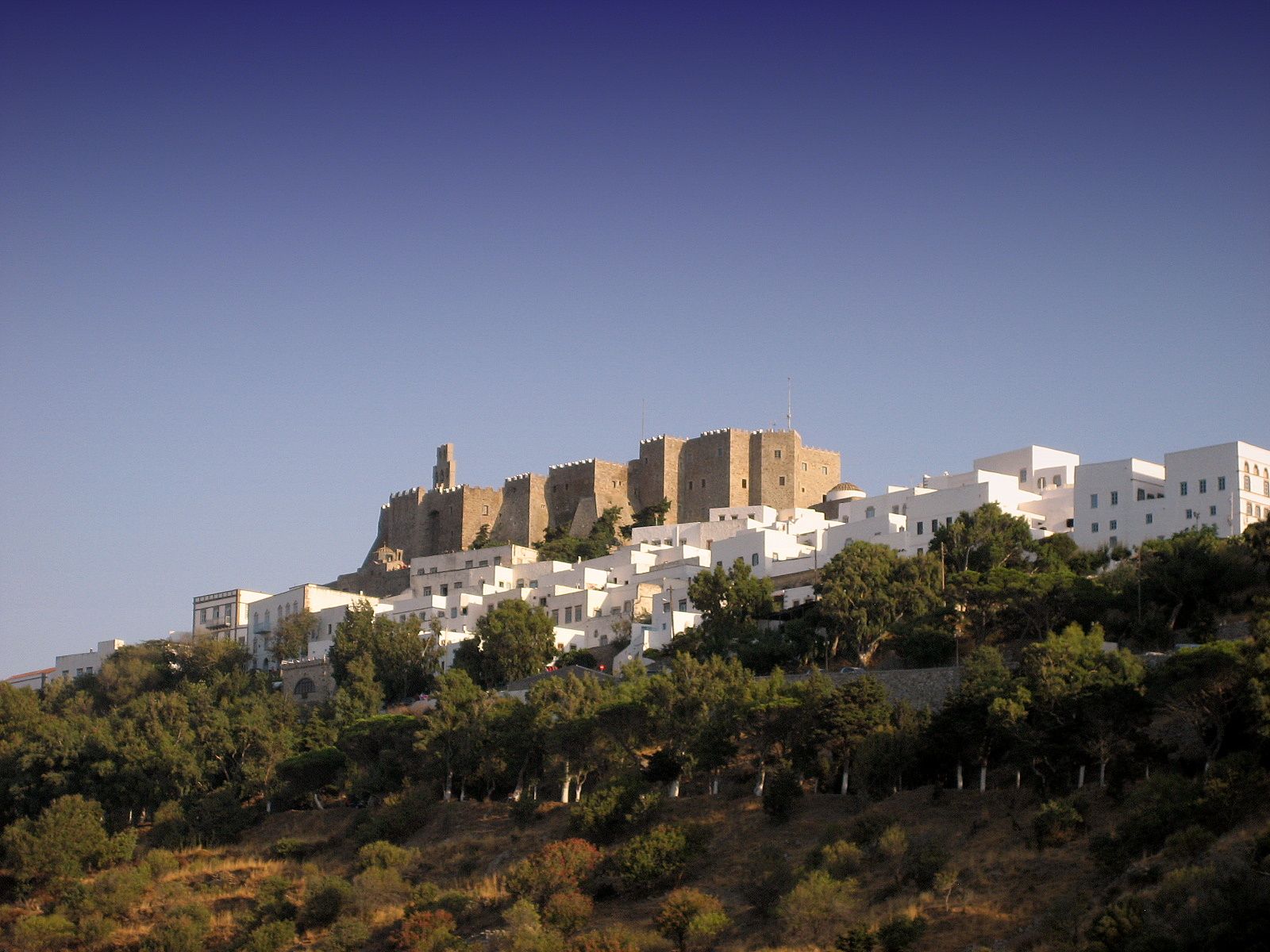
"Discover the authentic beauty of Patmos."
=== History from the Classical period to the present ===
Patmos is mentioned in the Book of Revelation, the last book of the Christian Bible. The book's introduction states that its author, John, was on Patmos when he was given (and recorded) a vision from Jesus. Early Christian tradition identified this writer John of Patmos as John the Apostle. For this reason, Patmos is a destination for Christian pilgrimage. Visitors can see the cave where John is said to have received his Revelation (the Cave of the Apocalypse), and several monasteries on the island are dedicated to Saint John.
The Historic Centre (Chorá) with the Monastery of Saint-John the Theologian and the Cave of the Apocalypse on the Island of Pátmos – UNESCO Collection on Google Arts and Culture
Research Note
Part of our exhaustive 2026 Golden Guide archive for Patmos. Verified by local historians and environmental researchers.
In 1999, the island's historic center, Chora, along with the Monastery of Saint John the Theologian and the Cave of the Apocalypse were declared World Heritage Sites by UNESCO because of their significance in Christianity and the preservation of ancient religious ceremonies on the island. The monastery was founded by Christodoulos Latrinos. Patmos is also home to the Patmian School, a notable Greek seminary.
After the death of John of Patmos, possibly around 100 AD, a number of Early Christian basilicas were erected on Patmos. Among these was a Grand Royal Basilica in honour of Saint John, built c. 300–350 AD at the location where the Monastery of Saint John the Theologian stands today.
Early Christian life on Patmos, however, barely survived Muslim raids from the 7th to the 9th century. During this period, the Grand Basilica was destroyed. In 1088, the Byzantine Emperor Alexios I Komnenos gave Christodoulos Latrinos the complete authority over the island of Patmos, as well as the permission to build a monastery on the island. The construction of the monastery started in 1101.
Research Note
Part of our exhaustive 2026 Golden Guide archive for Patmos. Verified by local historians and environmental researchers.
In 1999, the island's historic center, Chora, along with the Monastery of Saint John the Theologian and the Cave of the Apocalypse were declared World Heritage Sites by UNESCO because of their significance in Christianity and the preservation of ancient religious ceremonies on the island. The monastery was founded by Christodoulos Latrinos. Patmos is also home to the Patmian School, a notable Greek seminary.
Patmos is seldom mentioned by ancient writers. Therefore, very little is known about the earliest inhabitants. In the Classical period, the Patmians prefer to identify themselves as Dorians descending from the families of Argos, Sparta and Epidaurus, further mingling with people of Ionian ancestry.
Research Note
Part of our exhaustive 2026 Golden Guide archive for Patmos. Verified by local historians and environmental researchers.
Tom Stone: The Summer of My Greek Taverna: A Memoir, Simon & Schuster, New York NY 2003, ISBN 0-7432-4771-X (Stone brings readers into the tiny Greek island world of Patmos.)
Research Note
Part of our exhaustive 2026 Golden Guide archive for Patmos. Verified by local historians and environmental researchers.
Explore the rich local heritage and uncover hidden secrets of this amazing destination.
Research Note
Part of our exhaustive 2026 Golden Guide archive for Patmos. Verified by local historians and environmental researchers.
The dishes that define this place
Grilled perfectly.
Artisan made.
Foraged daily.
Explore the ancient pathways.
A pristine spot away from the crowds.
Unmarked history.
Curated by locals, organised by depth
Watch the sun dip below the Aegean.
Find Hotels in Patmos, Greece
via Booking.com — free cancellation on most rooms
Affiliate link — we earn a small commission at no extra cost to you