CYouInGreece
The Real Aegean
Meteora
archaeological site — Greece

Meteora

"Discover the authentic beauty of Meteora."

Culture

Culture in Meteora

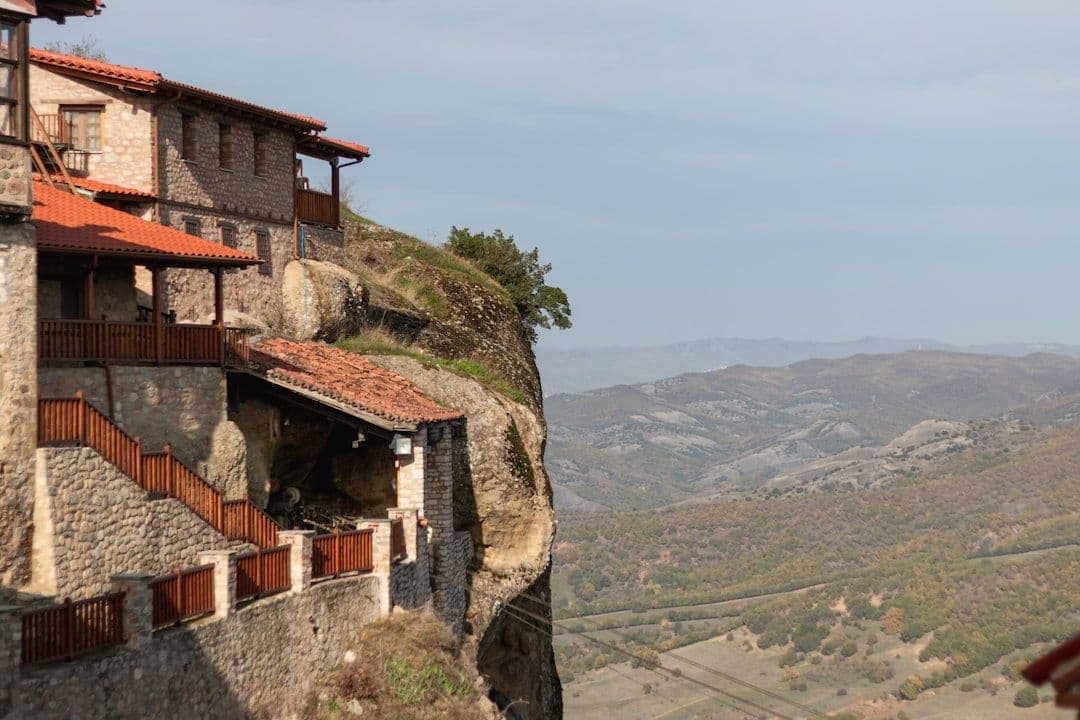
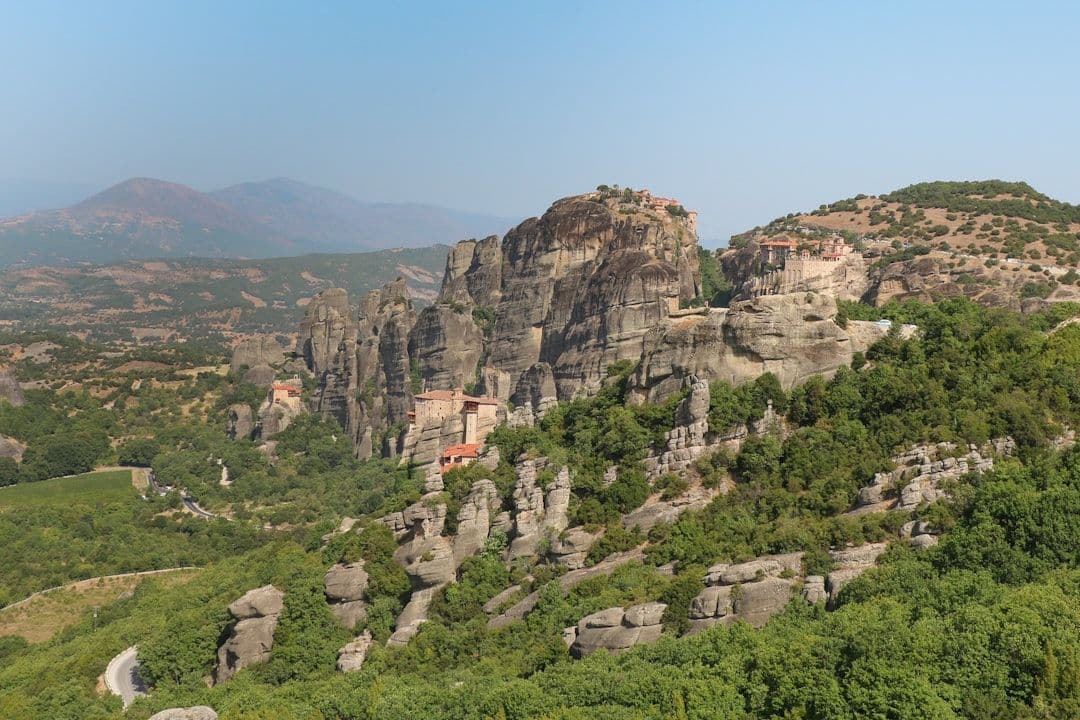
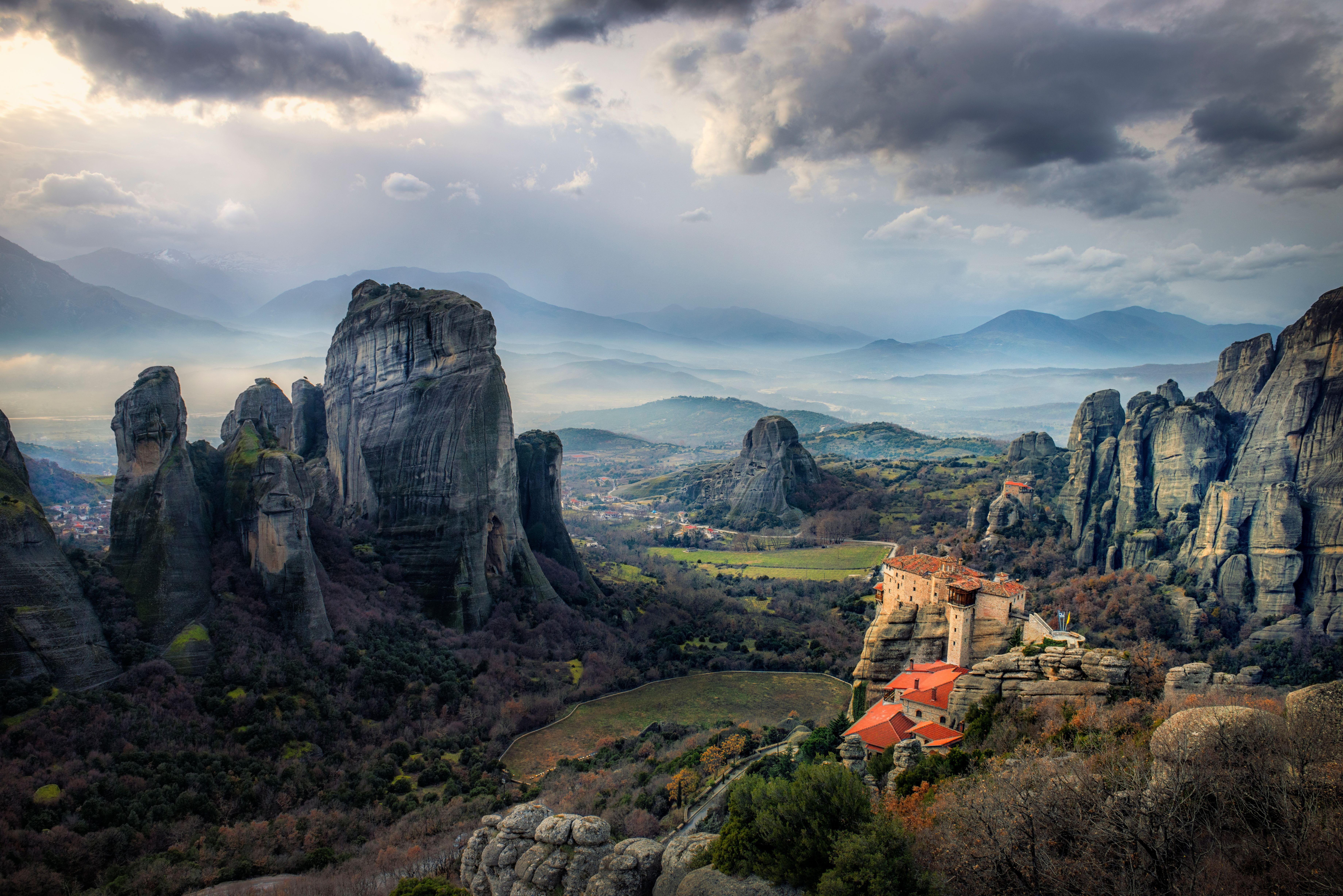
Meteora is located in between the town of Kalabaka and the village of Kastraki at the northwestern edge of the Plain of Thessaly near the Pineios river and Pindus Mountains. The Meteora complex, comprising the six extant monasteries, was added to the UNESCO World Heritage List in 1988 because of its outstanding architecture and beauty, combined with religious and cultural significance.

=== History and construction of the monasteries ===

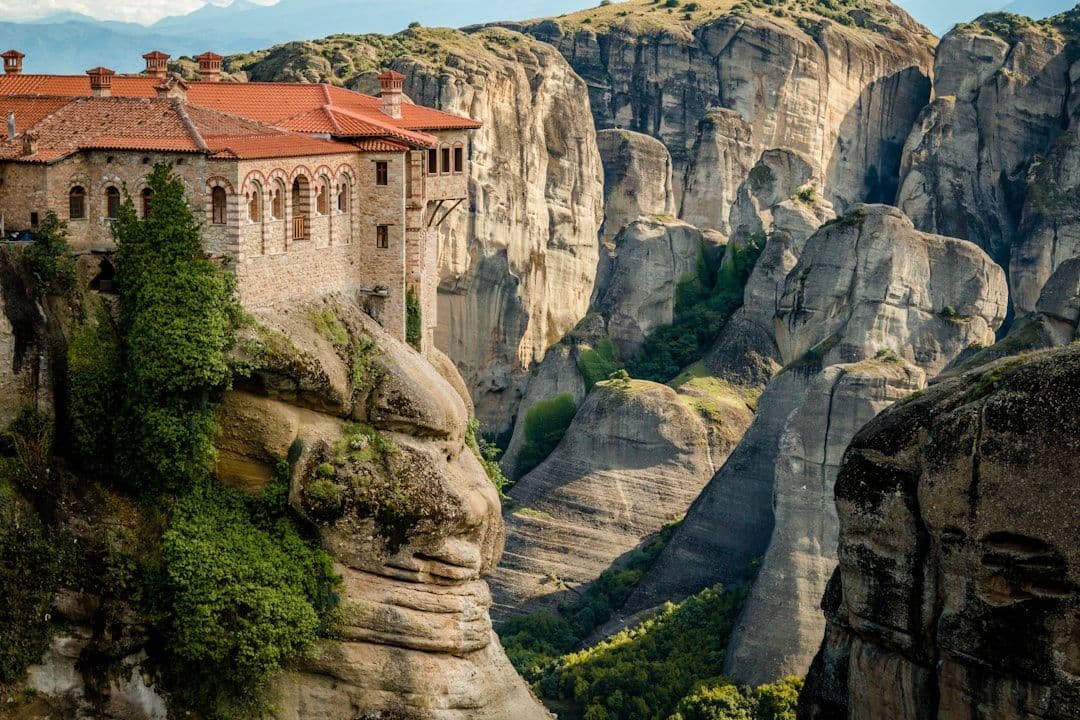
Access to the monasteries was originally (and deliberately) difficult, requiring either long ladders that were latched together, or large nets that were used to haul-up both goods and people. This required quite a leap of faith, because the ropes were replaced, so the story goes, only "when the Lord let them break". In the words of UNESCO: "The net in which intrepid pilgrims were hoisted up vertically alongside the 373-metre (1,224 ft) cliff where the Varlaam monastery dominates the valley symbolizes the fragility of a traditional way of life that is threatened with extinction."

Churches

Churches in Meteora

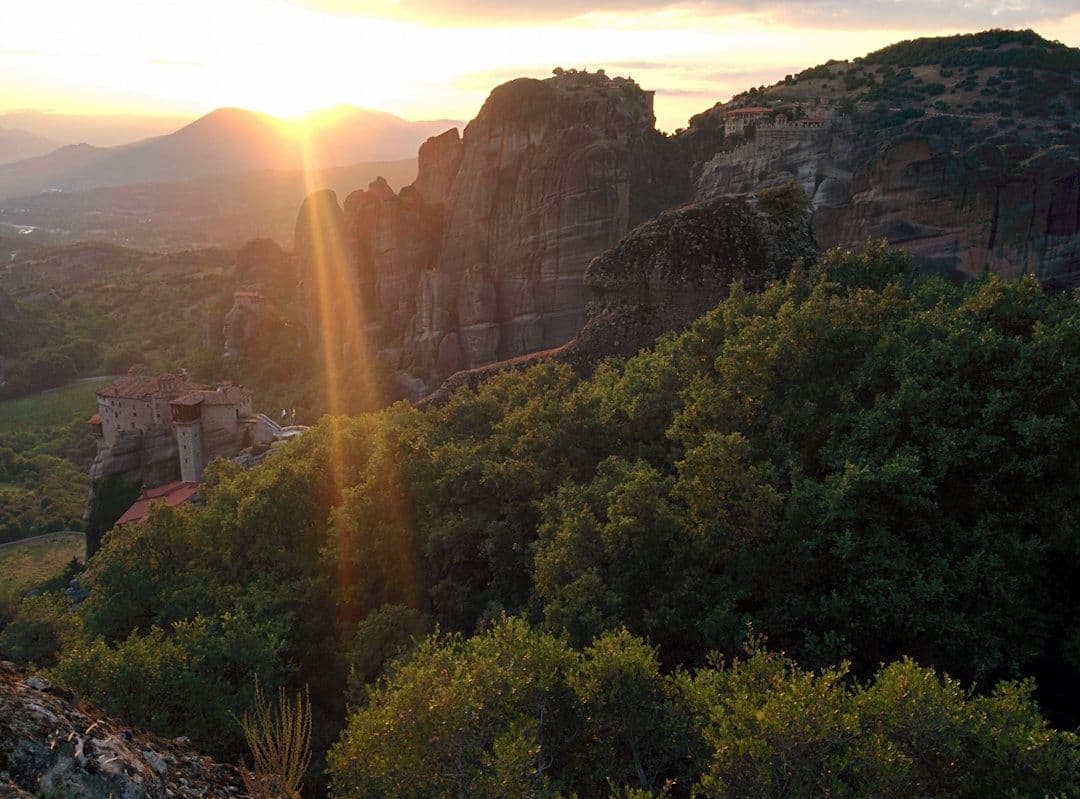
The Meteora (; Greek: Μετέωρα, pronounced [meˈteora]) is a rock formation in the regional unit of Trikala, in Thessaly, in northwestern Greece, hosting one of the most prominent complexes of Eastern Orthodox monasteries, viewed locally as second in importance only to Mount Athos. Their height is more than 20 metres (66 ft).

Meteora is not mentioned in classical Greek myths, nor in Ancient Greek literature. The first people who were documented to inhabit Meteora after the Neolithic Era were an ascetic group of hermit monks who, in the 800s CE, moved up to the ancient pinnacles. They lived in hollows and fissures in the rock towers, some of them as high as 550 metres (1,800 ft) above the plain. This great height, combined with the sheerness of the cliff walls, kept away all but the most determined visitors. Initially, the hermits led a life of solitude, meeting only on Sundays and special days, to worship and pray in a chapel built at the foot of a rock known as Dupiani.

The exact date of the establishment of the monasteries is widely believed to be unknown. However, there are clues to when each of the monasteries was constructed. By the late 11th century and early 1100s, a rudimentary monastic state had formed, called the Skete of Stagoi, and it was centered around the still-standing church of Theotokos (Mother of God). By the end of the 1100s, an ascetic community had flocked to Meteora.

Museums

Museums in Meteora

Meteora is not mentioned in classical Greek myths, nor in Ancient Greek literature. The first people who were documented to inhabit Meteora after the Neolithic Era were an ascetic group of hermit monks who, in the 800s CE, moved up to the ancient pinnacles. They lived in hollows and fissures in the rock towers, some of them as high as 550 metres (1,800 ft) above the plain. This great height, combined with the sheerness of the cliff walls, kept away all but the most determined visitors. Initially, the hermits led a life of solitude, meeting only on Sundays and special days, to worship and pray in a chapel built at the foot of a rock known as Dupiani.

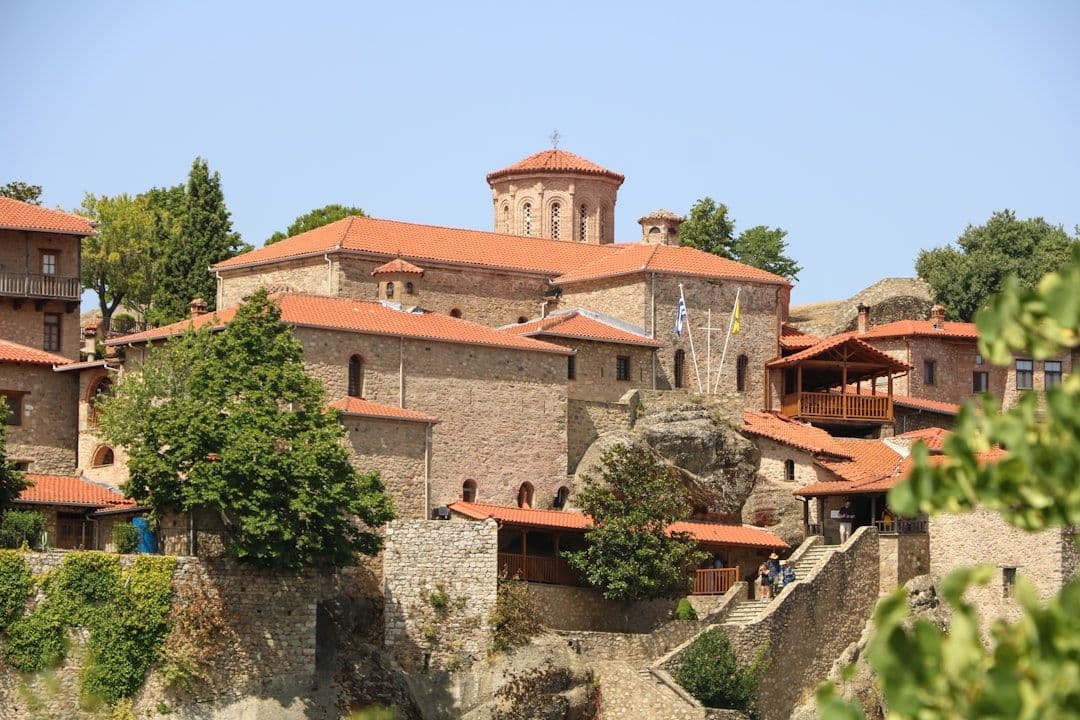
The Monastery of Varlaam (Greek: Βαρλαάμ; also known as Greek: Αγίων Πάντων, romanized: Agion Panton, lit. 'All Saints') is the second largest monastery of Meteora. The name Varlaam comes from a monk named Varlaam who scaled the rocks in 1350 and began construction on the monasteries. Varlaam built three churches by hoisting materials up the face of the cliffs. After Varlaam's death, the monastery was abandoned for two hundred years until two monk brothers, Theophanes and Nektarios Apsarades, came to the rock in the 16th century and began to rebuild the churches in October 1517. The two brothers from Ioannina spent twenty-two years hoisting materials to the top of the rock formation, however, the building only is reported to have taken around twenty days. Monks have been present since the 16th century, however, there has been a constant decline in their presence since the 17th century. Today the monastery is accessed through a series of ladders that scale the north side of the rock. The museum is open to travelers and contains a wide array of relics and ecclesiastical treasures. As of 2015 there are seven monks remaining in Varlaam.

The Monastery of the Holy Trinity (Greek: Αγίας Τριάδος, romanized: Agias Triados) is believed to have been built in the 14th and 15th century. Even prior to this, ancient Greeks established hermitages at the base of the rock cliffs. In the 14th century, John Uroš moved to the Meteora and endowed and built monasteries on top of the rock cliffs. He offered the sanctuaries as a safe haven during times of political upheaval. The monk Dometius was said to be the founder of the monastery, arriving at the site of Holy Trinity in 1438. The actual monastery is believed to have been built between 1475 and 1476. Some do say that the exact construction date of the monastery like many of the other monasteries is unknown. By the end of the 16th century this was one of the last six monasteries still atop the Meteora.

Gastronomy

Gastronomy in Meteora

Explore the rich local heritage and uncover hidden secrets of this amazing destination.

Entertainment

Entertainment in Meteora

Explore the rich local heritage and uncover hidden secrets of this amazing destination.

Local Perspective

The Diary of Nikos

"The secrets you won't find in the official archives."

Nikos' Diary
Kastraki, Meteora

The Stone Spikes and Diesel Fumes

The bus coughed its last wheezing breath into Kastraki, spitting me out into a swirl of dust and the faint, acrid smell of diesel. Above, the rocks loomed, brutal and ancient, like teeth broken from the jaw of the earth. The afternoon sun, relentless and unforgiving, hammered down, making the ancient stone glow with a raw, geological power. Forget your postcard fantasies; this is a place of sheer, unyielding rock and the persistent hum of crickets. The town below, a scattering of terracotta roofs, feels insignificant against such a backdrop, a tiny human footnote.

There's a gritty realism to the air here. It's not a place for soft-focus contemplation, but for acknowledging the sheer, brute force of nature. The wind, when it kicks up, tastes of pine resin and dry earth. Locals eye you with a weary indifference, used to the endless stream of gawkers. This isn't a museum piece; it's a living landscape, scarred and magnificent, indifferent to your awe.

The Verdict

"Imposing. Worth the ride, just brace for the reality."

Nikos' Diary
Grand Meteoron Monastery perimeter

Monks, Mass Tourism, and the Grind

Up here, where the monks once sought solitude, the silence has been shattered by the rumble of tour buses and the drone of a dozen languages vying for dominance. Grand Meteoron, the big one, stands defiant on its rock, but the climb is now a bottleneck, a slow shuffle past selfie sticks and cheap souvenir stalls selling icons that look mass-produced in some dreary factory. The air is thick with the faint scent of old incense trying to battle the collective body odor of a thousand weary travelers.

You get a glimpse of the grandeur, sure, the sheer audacity of building such structures on these precipitous peaks. But the experience itself is diluted, flattened by the sheer volume of human traffic. The 'spiritual journey' feels more like an obstacle course. If you want any semblance of quiet, you'd better arrive before the sun is even a rumor or resign yourself to elbowing your way through the throng.

The Verdict

"See it early, or from a distance. The quiet is gone."

Nikos' Diary
Kalambaka's side streets

Lamb Fat and Local Lies

Escaping the main drags of Kalambaka, I ducked into a taverna that looked like it hadn't seen a fresh coat of paint since the Junta fell. No pretense, just plastic chairs and a few grizzled old men arguing over backgammon. The air hung heavy with cigarette smoke and the promise of something substantial. I ordered the paidakia – lamb chops, hammered thin and grilled until the fat crackled and spit. They arrived glistening, unapologetically greasy, smelling of char and herbs.

This isn't refined dining; it's honest fuel. The meat was strong, almost wild-tasting, the bones picked clean with relish. Washed down with rough, local retsina that tasted faintly of turpentine and pine needles, it was exactly what was needed. The conversation around me was guttural, unintelligible, but real. No smiles for the tourist, just the grind of daily life played out against the clinking of glasses and the occasional burst of laughter. Forget the views; sometimes, you just need a plate of proper lamb.

The Verdict

"Forget the views, eat the lamb and drink the cheap wine."

Gastronomy

What to Eat.
And Where to Find It.

Taste of the Land

The dishes that define this place

🍽

A robust, peasant stew. Think thick, rustic sausages, pan-fried hard with green peppers, onions, and slow-cooked tomatoes until it all melds into a chunky, savory mess. It's served bubbling hot, often with a slick of oil on top, demanding to be sopped up with crusty village bread. Heavy, greasy, and utterly satisfying after a day climbing rocks.
🍽

The local firewater, a clear, potent spirit distilled from grape pomace, served neat in small, chilled shot glasses. It hits hard, then warms your gut. It's never drunk alone; always accompanied by a small plate of 'meze' – perhaps some sharp feta, briny olives, a sliver of cured meat, or pickled wild greens. It's for lingering, for conversation, for cutting through the afternoon heat or dulling the edges of a long day.

Forget the flaky, delicate versions. This is a substantial, savory cheese pie, a hefty wedge from a massive round. Made with layers of rough, hand-rolled phyllo, often crusted with toasted sesame seeds, and packed with a generous, slightly sour, salty feta filling. Best grabbed from a no-frills bakery early in the morning, still warm, eaten standing on the street corner as the town wakes up.

Off the Map

What the Guidebooks Miss.

💎 Only locals know
The Scramble for Solitude

The Scramble for Solitude

Not on any map. A precarious spot off the main asphalt between Roussanou and Aghia Triada. It’s a worn path, slick with loose scree, leading to a flat rock shelf. No railings, no designated viewpoint sign, just a raw, unobstructed vantage for watching the sunset paint the formations in bruised hues and long shadows. You'll likely be alone, or with a few weathered locals.

💎 Only locals know
The Forgotten Sanctuary

The Forgotten Sanctuary

The Hermitage of Saint George Mandilas, beneath Aghio Pnevma. Most tour buses roar past this, focused on the big players. This tiny, cliff-hugging hermitage is often closed, requiring a scramble and a bit of nerve to even reach its entrance. The air inside, when it's accessible, is thick with the scent of old rock and forgotten prayers. The faded frescoes whisper of a harder, more isolated life. It feels genuinely old, authentically ascetic.

💎 Only locals know
The Old Man's Honey

The Old Man's Honey

Not a shop, not a brand. An old man, his face a roadmap of sun and hard living, selling wild thyme honey from the back of his battered blue pickup truck. He sets up sporadically on the road between Kastraki and Kalambaka. The honey is dark, almost tar-like, with a potent, earthy flavor that tastes of the sparse, sun-baked scrubland. He won't try to upsell you, just takes your euros and gives you a jar of honest, unpasteurized sweetness. His eyes hold a lifetime of observing the silent rocks.

Experiences

How to Spend Your Days.

Top Experiences

Curated by locals, organised by depth

Ditch the paved roads and the rental car. Locate the ancient footpaths, worn smooth by centuries of monks, pilgrims, and goats, that snake up the base of the rock formations to the monasteries. It's a steep, dusty, lung-busting climb, but you'll experience Meteora from a visceral perspective, smelling wild thyme, hearing the wind, and feeling the grit underfoot, miles away from the tour bus fumes.

From the Journal

Stories from Meteora

Plan Your Trip

Book your Meteora experience.

B.

Find Hotels in Meteora, Greece

via Booking.com — free cancellation on most rooms

Search Available Hotels →

Affiliate link — we earn a small commission at no extra cost to you

← Return to Encyclopaedia
Meteora — CYouInGreece