🍽
Fresh Catch
Grilled perfectly.
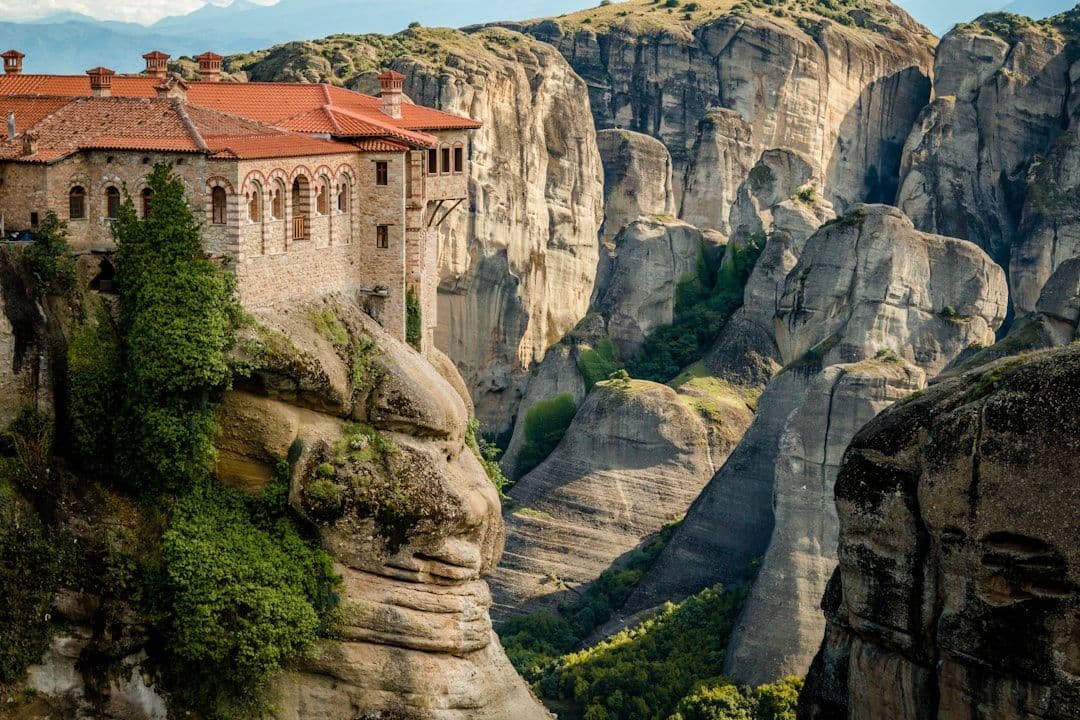
"Discover the authentic beauty of Mani."
Mani was known as Maina Polypyrgos ('Many-Towered Maina') for its numerous tower-houses. From 1978 onwards, the Greek state decreed many settlements with tower-houses "traditional", setting restrictions on construction. In 2003, the whole peninsula was designated a "cultural complex of international importance".
The Mani Peninsula had a turbulent history during the long period of Byzantine Greece (395–1453), as various powers fought over it and the whole Peloponnese (known for much of this time as "Morea"). Between 396 and 397, the Visigoths under Alaric I raided the Peloponnese. According to Procopius, a Greek historian writing in the 6th century, the Vandals under Gaiseric (r. 428–477) unsuccessfully assaulted Taenarum.
Mani's economy is oriented towards agriculture, tourism, and maritime activity.
Research Note
Part of our exhaustive 2026 Golden Guide archive for Mani. Verified by local historians and environmental researchers.
In ancient times, Mani was considered part of Laconia, a region dominated by the powerful city-state (polis) of Sparta. Its administration is now divided between the municipalities of East Mani in modern Laconia, and West Mani in Messenia. Mani's towns include Areopoli, Gytheio, and Pyrgos Dirou. Notable sites in Mani include the ruins of the ancient Temple of Poseidon at Cape Matapan, the Monastery of Panayia Yiatrissa, and the Apidima Cave with its Neanderthal fossils.
According to Seifried (2021), Constantine's statement, cited in the works of modern historians, led archaeologists conducting the initial studies of Mani's Byzantine churches to mistakenly conclude that the earliest were built in the 10th century. Seifried considers that because archaeological research undertaken since the 1960s into churches in southern Mani has tentatively dated several to the Early Byzantine period (330–717), the process of Christianization can be pushed as far back as the 5th century. Seifried notes that the pace of church building in Mani increased between the 10th and 15th centuries, with an average of 35 built per century compared to two per century in the Early Byzantine years.
By the mid-13th century, the resurgence of the Byzantine Empire under the Palaiologos dynasty had shifted the balance of power in Greece. In the 1250s the Pope appointed a "Latin," i.e., Roman Catholic, bishop to Mani, provoking resentment among the Orthodox Greeks, who soon removed him. In 1259, Byzantine forces captured Prince William at the Battle of Pelagonia. In 1262, William surrendered three fortresses to Emperor Michael VIII to obtain his release: Mystras, Grand Magne, and Monemvasia.
Research Note
Part of our exhaustive 2026 Golden Guide archive for Mani. Verified by local historians and environmental researchers.
In ancient times, Mani was considered part of Laconia, a region dominated by the powerful city-state (polis) of Sparta. Its administration is now divided between the municipalities of East Mani in modern Laconia, and West Mani in Messenia. Mani's towns include Areopoli, Gytheio, and Pyrgos Dirou. Notable sites in Mani include the ruins of the ancient Temple of Poseidon at Cape Matapan, the Monastery of Panayia Yiatrissa, and the Apidima Cave with its Neanderthal fossils.
The Mycenaean civilization (1900–1100 BC) dominated Mani and the Peloponnese in the Bronze Age. Mani flourished under the Mycenaeans. A temple dedicated to Apollo was erected at Cape Matapan. It was later re-dedicated as the Temple of Poseidon. Homer refers to a number of towns in the Mani region. The "Catalogue of Ships" in the Iliad names Messa, Oetylus, Kardamyli, Gerenia, Teuthrone, and Las. Mani features in many myths and legends, with one describing a sea-hollowed cavern near Cape Matapan (ancient Taenarum) as a portal to Hades, the underworld.
In the late 6th century, Avars and Slavs invaded Greece, reaching much of the Peloponnese. The chronology, extent, and duration of invasions and subsequent occupations, the reliability of written, toponymic and archaeological evidence, the pace of Byzantine recovery, and the degree of lasting cultural influence, are all topics of academic dispute. The particular theory of Fallmerayer, a 19th-century German historian, that Avar, Slavic, and other peoples replaced the Greek population of the Peloponnese in this period has been tested by the genetic analysis of samples of modern populations: a 2017 paper found that "Peloponneseans are clearly distinguishable from the populations of the Slavic homeland and are very similar to Sicilians and Italians".
Research Note
Part of our exhaustive 2026 Golden Guide archive for Mani. Verified by local historians and environmental researchers.
Mani has been inhabited since prehistoric times. The Apidima Cave on the west side of the peninsula has yielded Neanderthal and Homo sapiens fossils from the Palaeolithic era. As of 2019, a Homo sapiens skull recovered from Apidima, dating to at least 210,000 years before present, is the earliest evidence of modern humans in Europe. Neolithic remains have been found on Mani's coast in the Alepotrypa Cave, a major settlement, cemetery and ceremonial site, and human and Neanderthal remains in the Kalamakia Cave, a Middle Palaeolithic site. The Lakonis I site, a collapsed Middle Palaeolithic cave on the coast near Gytheio, contains evidence of Neanderthals' use of fire to dispose of bones and other food refuse.
Many Maniots were engaged in producing sea salt in the 19th and early 20th centuries, largely on the west coast of the peninsula. There were four types of salt harvesting or production sites: natural salt pans formed in existing rock depressions along the shore (sites near Gerolimenas and Mezapos, for example); small artificial evaporation ponds excavated above sea level (such as a site near Artsi); large artificial ponds with associated temporary housing for workers (near Koukouri); and major saltworks built with significant technical infrastructure and permanent worker accommodation (on the Tigani peninsula). Salt was traded for foodstuffs such as barley, wheat, maize, cheese, and dried figs.
The distinctive ingredients of traditional Maniot cuisine include olive oil and olives; citrus fruits, especially oranges; horta (χόρτα 'wild greens') and aromatic herbs; lupins, broad beans, and lentils; local cheeses such as the white, semi-hard sfela (σφέλα); cheese pies and other savoury pies; lalangia (λαλάγγια 'fried dough strips'); diples (δίπλες 'honey rolls'); and pork products such as syglino (σύγκλινο 'salted pork preserved in pork fat').
Research Note
Part of our exhaustive 2026 Golden Guide archive for Mani. Verified by local historians and environmental researchers.
Explore the rich local heritage and uncover hidden secrets of this amazing destination.
Research Note
Part of our exhaustive 2026 Golden Guide archive for Mani. Verified by local historians and environmental researchers.
The dishes that define this place
Grilled perfectly.
Artisan made.
Foraged daily.
Explore the ancient pathways.
A pristine spot away from the crowds.
Unmarked history.
Curated by locals, organised by depth
Watch the sun dip below the Aegean.
Find Hotels in Mani, Greece
via Booking.com — free cancellation on most rooms
Affiliate link — we earn a small commission at no extra cost to you