🍽
Fresh Catch
Grilled perfectly.
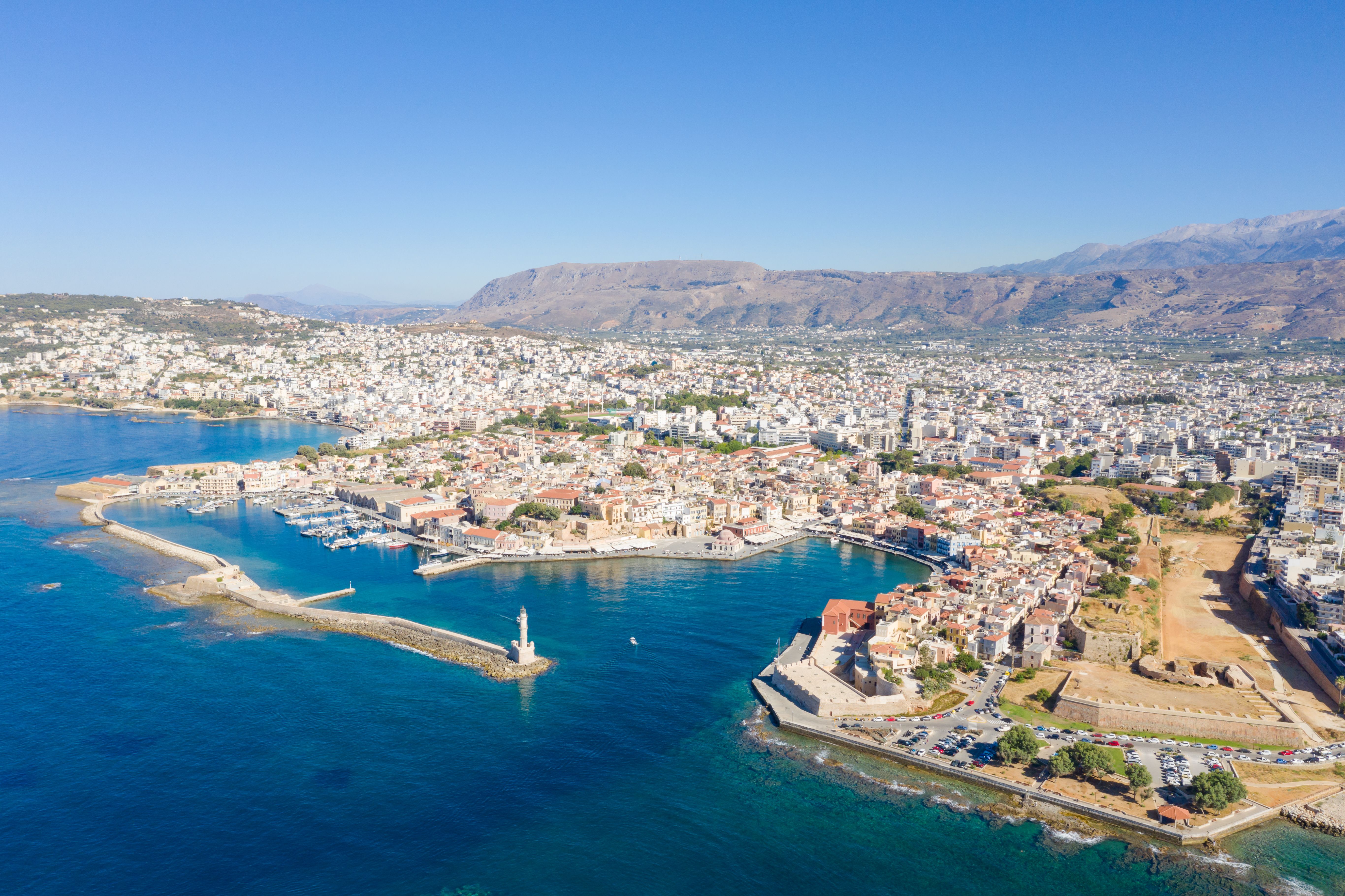
"Discover the authentic beauty of Chania."
The Venetian rule was initially strict and oppressive but slowly the relations between the two parts improved. Contact with Venice led to close intertwining of Cretan and Venetian cultures, without, however, the Cretans losing their Greek Orthodox nature. Its fortifications were strengthened, giving Chania the form that it still has today. On the other hand, after the fall of Constantinople in 1453, many priests, monks and artists took refuge in Crete and reinforced the Byzantine religion and culture on the island. The city of Canea during the period that followed was a blend of Byzantine, Venetian, and Classical Greek cultural elements. Many of the important buildings of the town were built during this era and the intellectual activities (written word, music, education) were also promoted.
The city of Chania slowly regained its normal pace of development during the 1950s, trying to overcome the difficulties that the war had left in its aftermath. During the 1970s, Crete became a major tourist destination for Greek and international tourists, something that gave a significant boost to the city's economy and affected the everyday life and the overall culture of the locals. The capital of Crete was moved to Heraklion in 1971.
The modern part of Chania is where most locals live and work. It is less traditional than the old town, but there are still areas of some historical interest.
Research Note
Part of our exhaustive 2026 Golden Guide archive for Chania. Verified by local historians and environmental researchers.
The Venetian rule was initially strict and oppressive but slowly the relations between the two parts improved. Contact with Venice led to close intertwining of Cretan and Venetian cultures, without, however, the Cretans losing their Greek Orthodox nature. Its fortifications were strengthened, giving Chania the form that it still has today. On the other hand, after the fall of Constantinople in 1453, many priests, monks and artists took refuge in Crete and reinforced the Byzantine religion and culture on the island. The city of Canea during the period that followed was a blend of Byzantine, Venetian, and Classical Greek cultural elements. Many of the important buildings of the town were built during this era and the intellectual activities (written word, music, education) were also promoted.
Under the Ottoman Turkish name Hanya (خانیه), Muslims resided mainly in the eastern quarters, Kastelli and Splantzia, where they converted the Dominican church of St Nicholas into the central Sovereign's Mosque (Turkish: Hünkar Camısı). They also built new mosques such as the Küçük Hasan Pasha Mosque or Yali Mosque on the harbour. Public baths (hamam), and fountains were a feature of the Ottoman city. The pasha of Crete resided in Hanya.
Other historical buildings in the area include Eleftherios Venizelos's House (built 1876-1880), the old French school (now property of the Technical University of Crete, housing the Department of Architecture), the Church of Agia Magdalini (built 1901-1903), The "Palace" (built 1882, house of Prince George during the period of the Cretan independence) and The Church of Evangelistria (built 1908–1923). Part of the marine area of Halepa is called Tabakaria, where a unique architectural complex of old leather processing houses is situated.
Research Note
Part of our exhaustive 2026 Golden Guide archive for Chania. Verified by local historians and environmental researchers.
Chania was the site of a Minoan settlement, known from Linear B tablets from Knossos as having been named Ku-do-ni-ja (Mycenaean Greek: 𐀓𐀈𐀛𐀊). The subsequent Greek settlement was likewise known as Cydonia (Ancient Greek: Κυδωνία, Kydōnía), ultimately the source of the English word "quince".
Some notable archaeological evidence for the existence of this Minoan city below some parts of today's Chania was found by excavations in the district of Kasteli in the Old Town. This area appears to have been inhabited since the Neolithic Age.
Cydonia was not well documented in late antiquity or in the early medieval period, when it was first ruled by the Byzantine Empire (395–824) and then by the Emirate of Crete (824–961). The Arabs seem to have begun calling the settlement al-Ḵān (Arabic: الخان), literally "the Caravanserai" or "Inn" but possibly transcribing the name of a neighborhood previously devoted to the worship of the Minoan god Welchanos. The city had become known as Chania in Greek by the time of the second period of Byzantine rule (961–1204). In order to deter another Arab invasion, the Byzantines strongly fortified the city, reusing materials from ancient buildings in the area. Chania was the seat of a Byzantine bishopric, which became the Roman Catholic Diocese of La Canea under Venetian rule and then the Latin titular see of Cydonia.
Research Note
Part of our exhaustive 2026 Golden Guide archive for Chania. Verified by local historians and environmental researchers.
The main square of the Old Town (next to the west end of Kasteli) is Eleftherios Venizelos Square, also known as Syntrivani (from Turkish şadırvan 'fountain'). It is the heart of the tourist activities in the area. Next to this (on the west side) lies the Topanas district, which was the Christian quarter during the Ottoman period. Its name comes from the Venetian ammunition warehouse (Turkish tophane), which was located there. The Jewish quarter (Evraiki or Ovraiki) was located at the north-west of the Old Town, behind the harbour and within the borders of Topanas. The Topanas area has many narrow alleys and old buildings, some of which have been restored as hotels, restaurants, shops and bars. This makes it a popular place especially during the warm period (April–October). In the winter, it still remains a centre of activities (especially for nightlife).
The district of Koum Kapi (the Venetians had first named it "Sabbionara", which means "the Gate of the Sand", the same as "Koum Kapi") situated beyond the walls at the eastern part of the old town, was also one of the first places to be inhabited outside the fortification walls. Initially, it was home for the "Halikoutes", a group of Bedouins from North Africa who had settled there in the last years of Ottoman rule. Nowadays it is a developing area with many cafes, bars and restaurants on its beach.
There are numerous cafes, restaurants and bars throughout the Old Town and especially around the old Venetian harbour, at Enetiki Tafros (Venetian moat) and at Splantzia square, but also along the waterfront of the Koum Kapi and Nea Hora neighbourhoods. In summer, the bars and restaurants at Platanias and Agia Marina are also busy.
Research Note
Part of our exhaustive 2026 Golden Guide archive for Chania. Verified by local historians and environmental researchers.
The main square of the Old Town (next to the west end of Kasteli) is Eleftherios Venizelos Square, also known as Syntrivani (from Turkish şadırvan 'fountain'). It is the heart of the tourist activities in the area. Next to this (on the west side) lies the Topanas district, which was the Christian quarter during the Ottoman period. Its name comes from the Venetian ammunition warehouse (Turkish tophane), which was located there. The Jewish quarter (Evraiki or Ovraiki) was located at the north-west of the Old Town, behind the harbour and within the borders of Topanas. The Topanas area has many narrow alleys and old buildings, some of which have been restored as hotels, restaurants, shops and bars. This makes it a popular place especially during the warm period (April–October). In the winter, it still remains a centre of activities (especially for nightlife).
Finally, a very distinctive area of the Old Town is the harbour itself and generally the seafront. Akti Tompazi, Akti Kountouriotou and Akti Enoseos (marina) all feature several historical buildings and nightlife. The main street that combines the modern town with the old town is Halidon Street.
There are five cinemas (three of them open-air), concentrating both in commercial and independent movies and occasionally organizing small festivals.
Research Note
Part of our exhaustive 2026 Golden Guide archive for Chania. Verified by local historians and environmental researchers.
The dishes that define this place
Grilled perfectly.
Artisan made.
Foraged daily.
Explore the ancient pathways.
A pristine spot away from the crowds.
Unmarked history.
Curated by locals, organised by depth
Watch the sun dip below the Aegean.
Most visitors to Crete see the coast and call it Crete. The interior — the Lefka Ori, the Amari Valley, the villages that have not changed since the Byzantine era — is a different country entirely.
Read moreThe mountain shepherds of the Cretan interior have maintained a cuisine of radical simplicity and extraordinary quality for centuries. Lamb, cheese, wild herbs, and the wood fire — nothing more is required.
Read more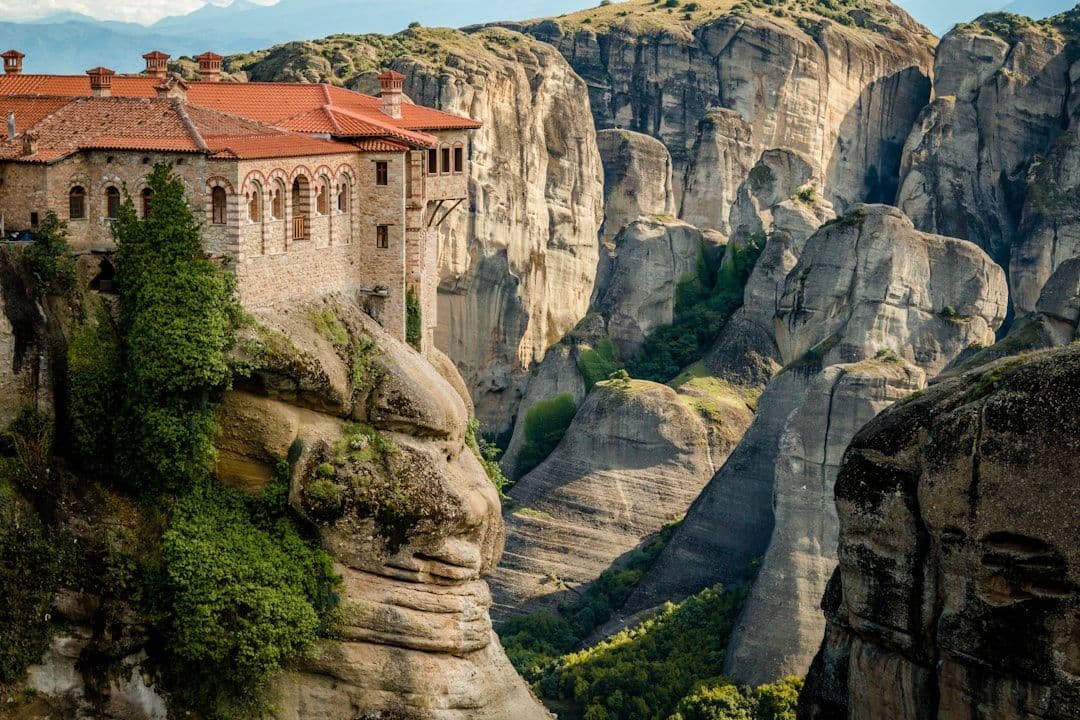
Forget the azure Aegean for a moment; a different Greece awaits, cloaked in ancient stone and verdant peaks. Discover the profound tranquility and raw beauty found far above the island shores.
Read moreFind Hotels in Chania, Greece
via Booking.com — free cancellation on most rooms
Affiliate link — we earn a small commission at no extra cost to you