🍽
Fresh Catch
Grilled perfectly.
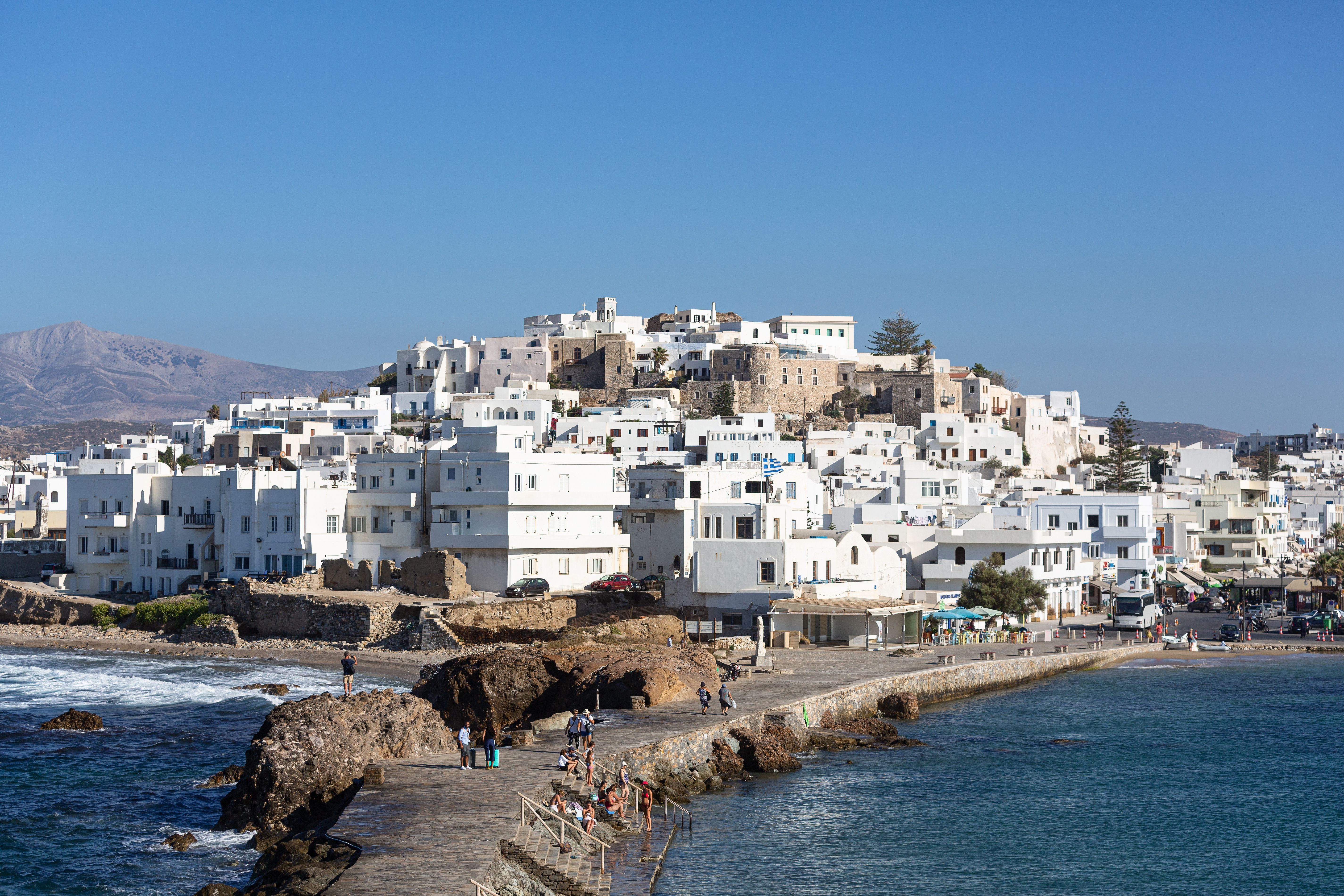
"Discover the authentic beauty of Naxos."
Naxos (; Greek: Νάξος, pronounced [ˈnaksos]) is a Greek island belonging to the Cyclades island group. It is the largest island in the group. The largest town and capital of the island is Chora or Naxos City, with 8,897 inhabitants out of the total 20,578 in the island (2021 census). The main villages are Filoti, Apiranthos, Vivlos, Agios Arsenios, Koronos and Glynado. It was an important centre during the Bronze Age Cycladic Culture and in the Ancient Greek Archaic Period. The island is famous as a source of emery, a rock rich in corundum, which until modern times was one of the best abrasives available.
In Byzantine times, the island's capital was on the southern fortress of Apalyres. During this time, it suffered from Saracen raids, particular during the existence of the Emirate of Crete (824–961), to which the island occasionally paid tribute. Traces of Muslim artistic influence are visible in frescoes from the 10th century. Nevertheless, as in Antiquity, Naxos was celebrated for its agriculture and animal husbandry; the 12th-century geographer al-Idrisi records extensive cattle raising on the island.
Naxos is the most fertile island of the Cyclades. It has a good supply of water in a region where water is usually inadequate. Mount Zeus (1,004 metres or 3,294 feet) is the highest peak in the Cyclades, and tends to trap the clouds, permitting greater rainfall. This has made agriculture an important economic sector with various vegetable and fruit crops as well as cattle breeding, making Naxos the most self-sufficient island in the Cyclades. Naxos is well known within Greece for its "Arseniko Naxou" cheese, potatoes, Kitron (a local lemon-citrus spirit), and Naxian honey (which is largely derived from the nectar of thyme).
Research Note
Part of our exhaustive 2026 Golden Guide archive for Naxos. Verified by local historians and environmental researchers.
Explore the rich local heritage and uncover hidden secrets of this amazing destination.
Research Note
Part of our exhaustive 2026 Golden Guide archive for Naxos. Verified by local historians and environmental researchers.
Naxos (; Greek: Νάξος, pronounced [ˈnaksos]) is a Greek island belonging to the Cyclades island group. It is the largest island in the group. The largest town and capital of the island is Chora or Naxos City, with 8,897 inhabitants out of the total 20,578 in the island (2021 census). The main villages are Filoti, Apiranthos, Vivlos, Agios Arsenios, Koronos and Glynado. It was an important centre during the Bronze Age Cycladic Culture and in the Ancient Greek Archaic Period. The island is famous as a source of emery, a rock rich in corundum, which until modern times was one of the best abrasives available.
The quarrying of marble on Naxos began before 550 BCE. Naxian marble was used for the creation of the roof tiles at ancient Olympia and on the Athenian Acropolis, As of 2016, about 5,000 m³ of high value Naxian marble was being exported annually.
Research Note
Part of our exhaustive 2026 Golden Guide archive for Naxos. Verified by local historians and environmental researchers.
One legend has it that in the Heroic Age before the Trojan War, Theseus abandoned Ariadne on this island after she helped him kill the Minotaur and escape from the Labyrinth. Dionysus (god of wine, festivities, and the primal energy of life) who was the protector of the island, met Ariadne and fell in love with her. But eventually Ariadne, unable to bear her separation from Theseus, either killed herself (according to the Athenians), or ascended to heaven (as the older versions had it). The Naxos portion of the Ariadne myth is also told in the Richard Strauss opera Ariadne auf Naxos.
Research Note
Part of our exhaustive 2026 Golden Guide archive for Naxos. Verified by local historians and environmental researchers.
Naxos is a popular tourist destination, with several places of touristic interest, including beaches, villages and old ruins. Beaches on the island include Agia Anna, Agios Prokopios, Aliko, Kastraki, Mikri Vigla, Plaka, and Agios Georgios, most of them on the western side of the island, near Chora. Like other cycladic islands, Naxos is considered a windy place perfect for windsurfing, as well as kitesurfing. There are seven sports clubs on the island that offer both of these sports and other water activities.
Research Note
Part of our exhaustive 2026 Golden Guide archive for Naxos. Verified by local historians and environmental researchers.
The dishes that define this place
Grilled perfectly.
Artisan made.
Foraged daily.
Explore the ancient pathways.
A pristine spot away from the crowds.
Unmarked history.
Curated by locals, organised by depth
Watch the sun dip below the Aegean.
Find Hotels in Naxos, Greece
via Booking.com — free cancellation on most rooms
Affiliate link — we earn a small commission at no extra cost to you
